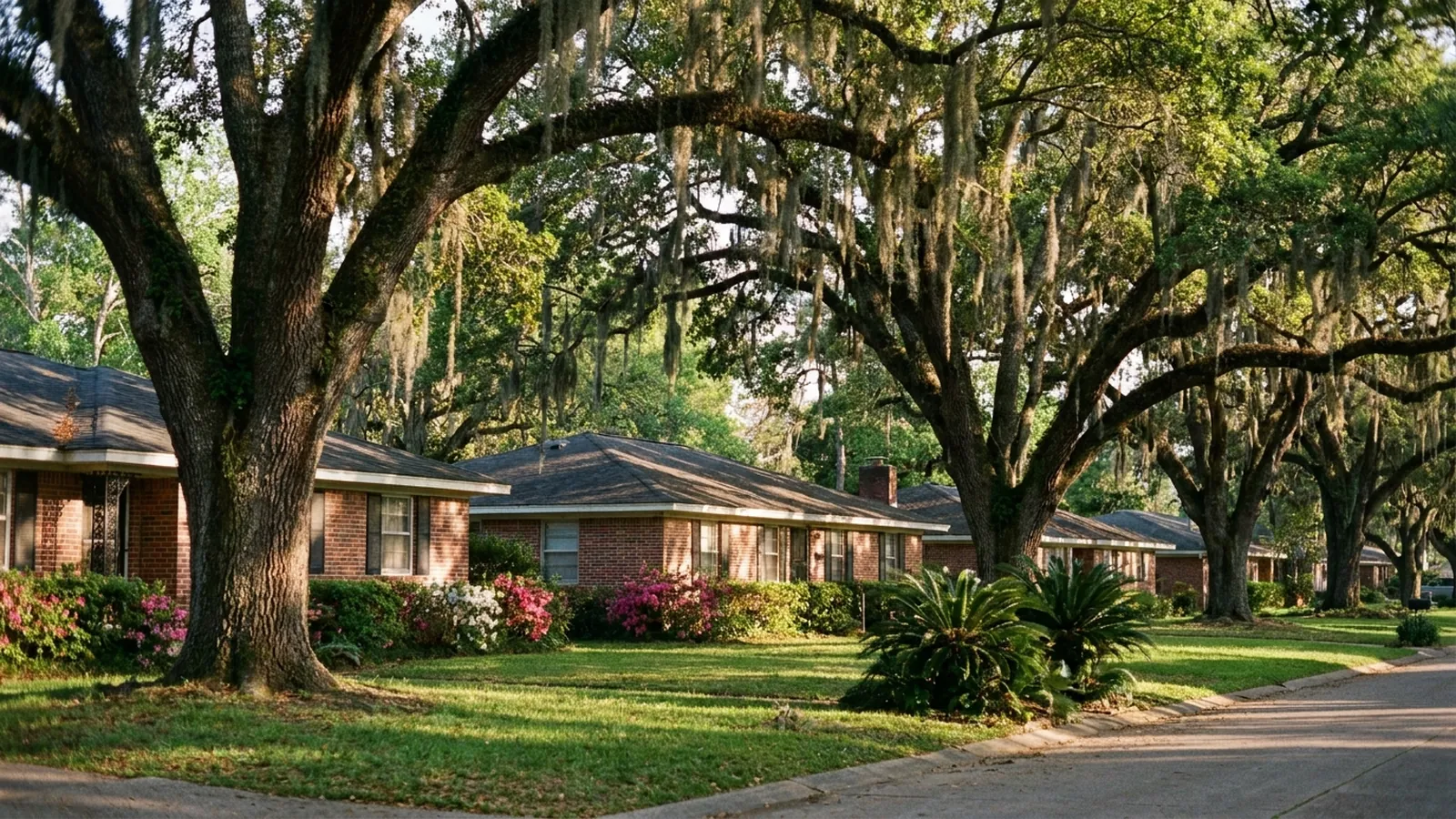
Baton Rouge Foundation Co. covers foundation repair across five parishes: piering, slab repair, house leveling, drainage correction, crack repair, and concrete leveling. Ask for an evaluation that includes floor elevation readings; many local specialists don't charge for it, and you can ask to keep the written assessment whether or not you hire the specialist.
Four things a good contractor will not do
No quote before measuring. A price produced from a photograph of a crack is a guess wearing a suit. Elevation readings across the footprint should come first, every time, and they sometimes say the honest answer is to wait.
No blaming the fault. The Baton Rouge Fault system runs through this parish and is genuinely unusual — active, and reaching the ground surface where most Gulf Coast growth faults do not. It is also unknowable from your driveway. Whether it bears on a specific property is a site-specific geotechnical question, and any contractor attributing your cracks to it without that assessment is selling rather than diagnosing.
No invented credentials. This site holds to that too: where an operator name, license number, or tenure cannot be verified, it is left out rather than filled in with something plausible. A company willing to invent the easy facts is telling you what it will do with the hard ones.
No selling the biggest scope available. If drainage at $1,500 solves it, that should be the recommendation, rather than a $12,000 scope that does not hold.
How a good Baton Rouge foundation repair evaluation runs
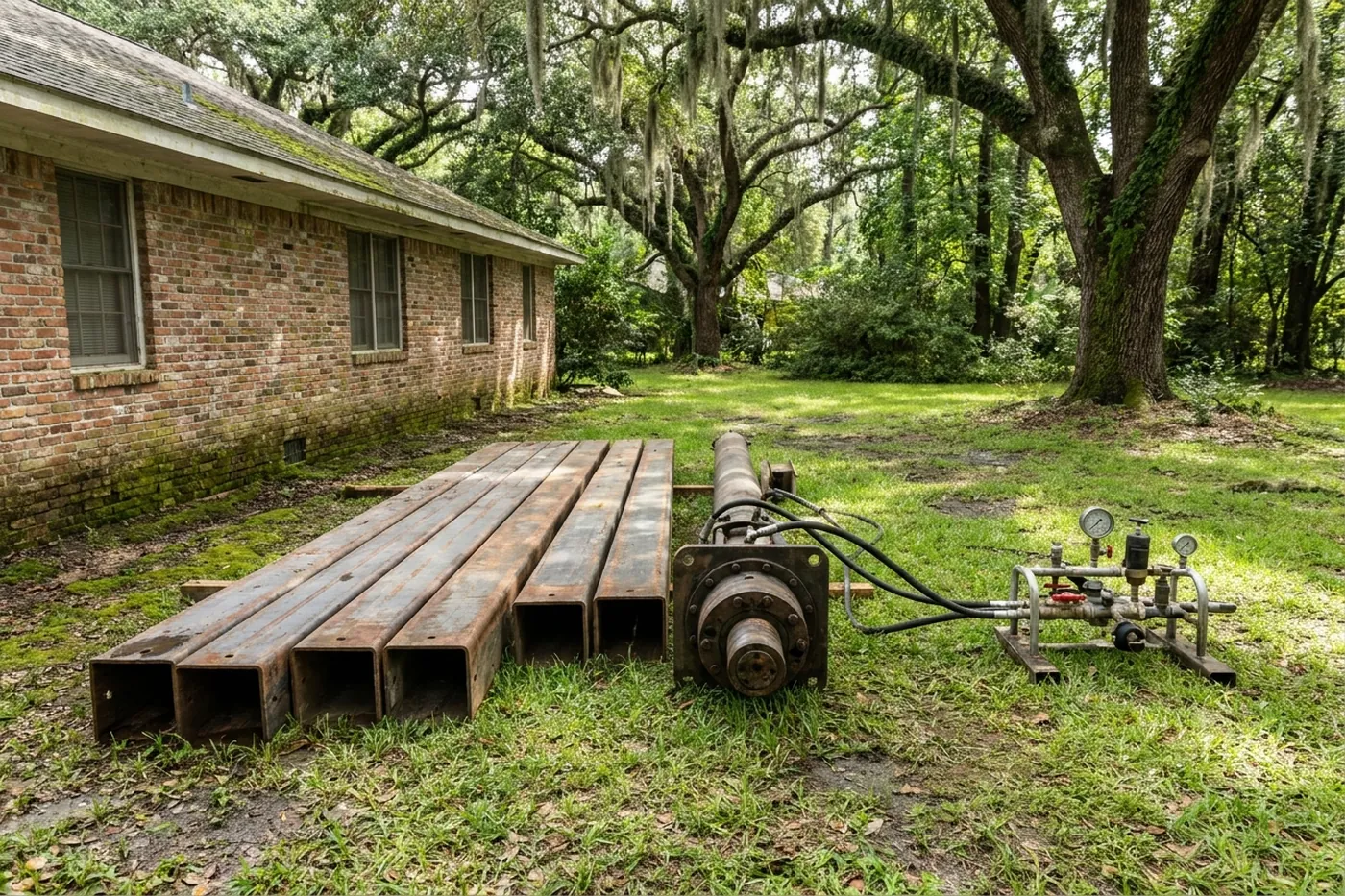
Floor elevations across the entire footprint — not beside the damaged wall, which is how you manufacture a justification for whatever you already planned to sell. Crack widths measured, dated, and photographed so they can be compared later. An exterior walk following where roof and surface water actually go. Then a written assessment naming the mechanism the readings support.
Ask for a document plain enough to hand to another contractor. See the services it might point to or what each one costs.
Why the method matters more here than most places
Baton Rouge has two mechanisms producing similar damage — moisture cycling in clay under 60.65 inches of annual rain, and settlement into soft alluvial ground. A method that does not distinguish them will recommend piers roughly every time, because piers are the larger sale. The measurement is the only thing standing between a homeowner and that outcome.
About us — the short version
How long have you been working in Baton Rouge?
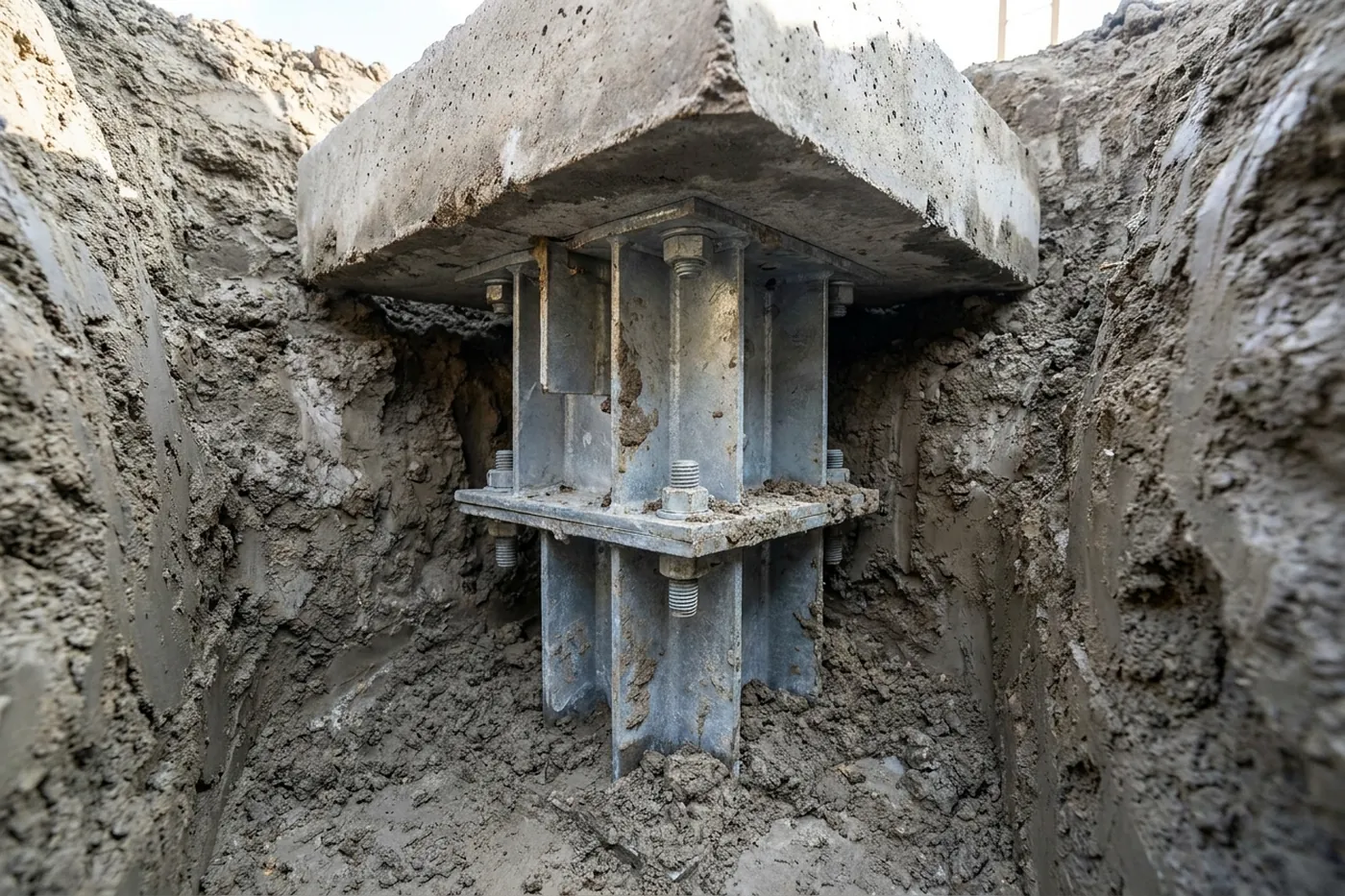
We don't do the repair work; we pass each request to one independent local specialist. We publish company details only once they can be verified, which is why you will not find invented founding dates or staff bios here. What to ask the specialist to commit to in writing is the method: elevations across the footprint, a stated depth assumption, and a pier log.
Are you licensed?
Louisiana requires a Home Improvement Registration for residential projects from $7,500 to $50,000 and a Residential or Commercial license above $50,000. We don't do the work, so the licence that matters is the specialist's. Ask them for their number and verify it directly with the Louisiana State Licensing Board for Contractors rather than taking anyone's word.
Is the first visit free?
Many local specialists don't charge for the first visit, but it depends on the company. Ask when the specialist calls, before they come out. A company paid only for work it performs has an obvious incentive to find work - which is exactly why the assessment has to be checkable, and why you should ask for the readings in writing to keep.
What if I already have a quote from someone else?
Bring it. Check whether the depth assumption, overage rate, pier log commitment, and warranty scope are the ones you want, and ask the specialist to explain any difference. There is no requirement to switch.
Get a Baton Rouge foundation evaluation
Tell us what the house is doing and roughly when it started — a crack that opens in dry weather and closes after rain reads differently from one that only ever widens. If you know which way the floor falls, say so. That single detail often separates a moisture problem from a ground-movement problem before anyone visits. A local specialist who serves Baton Rouge will call you back.