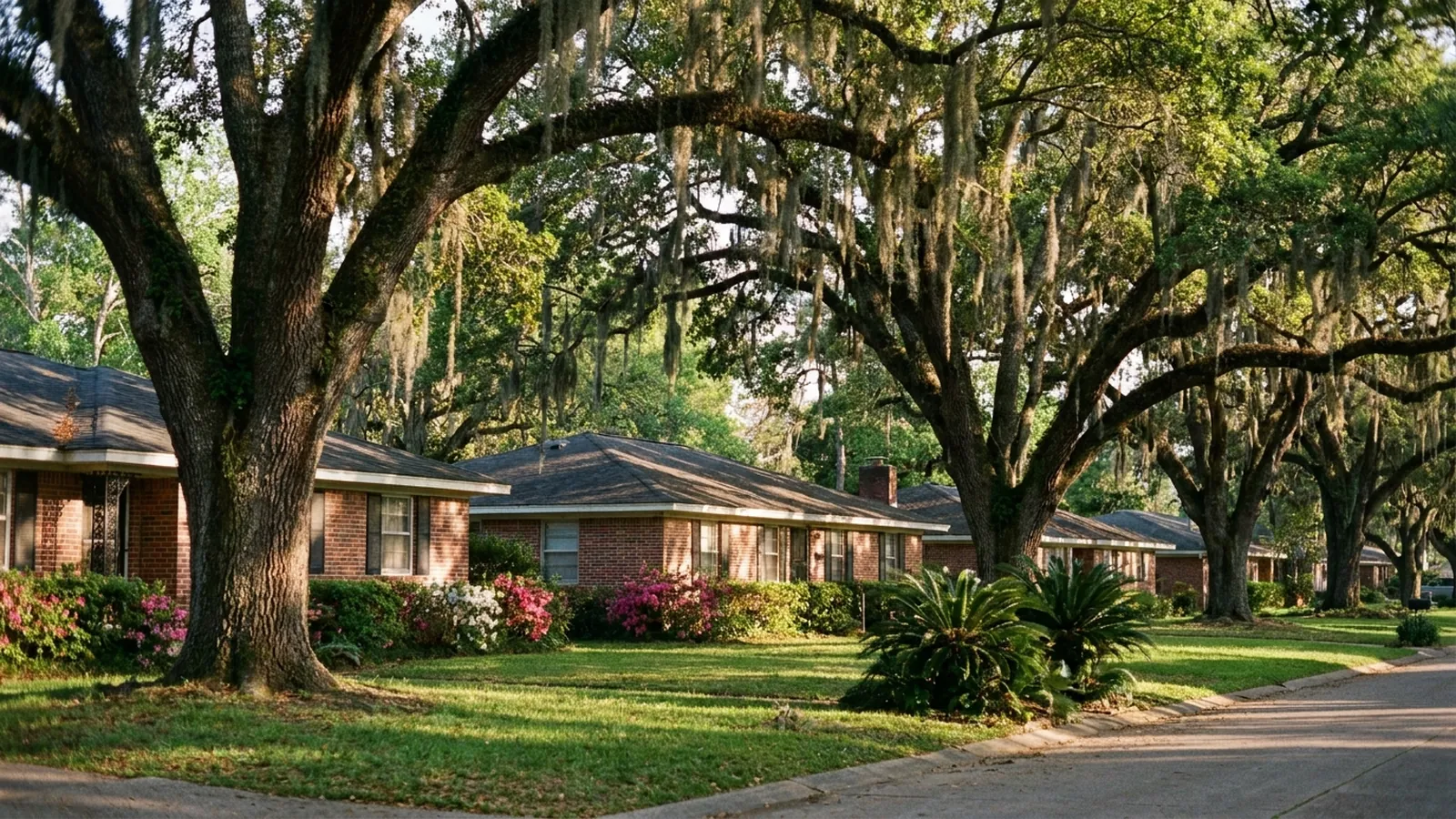
Nine foundation repair services for Baton Rouge, priced: piering $4,000–$15,000, slab work $3,500–$12,000, drainage $1,500–$6,000, cracks $400–$1,500, concrete leveling $500–$2,500. Ask whether the evaluation is free.
Sorted by what each one treats
For moisture-driven movement — the reversing kind, where cracks widen dry and close wet: drainage correction is the whole answer in most cases, and it is the cheapest thing on this page. Where two scopes disagree, an independent engineer is who settles it.
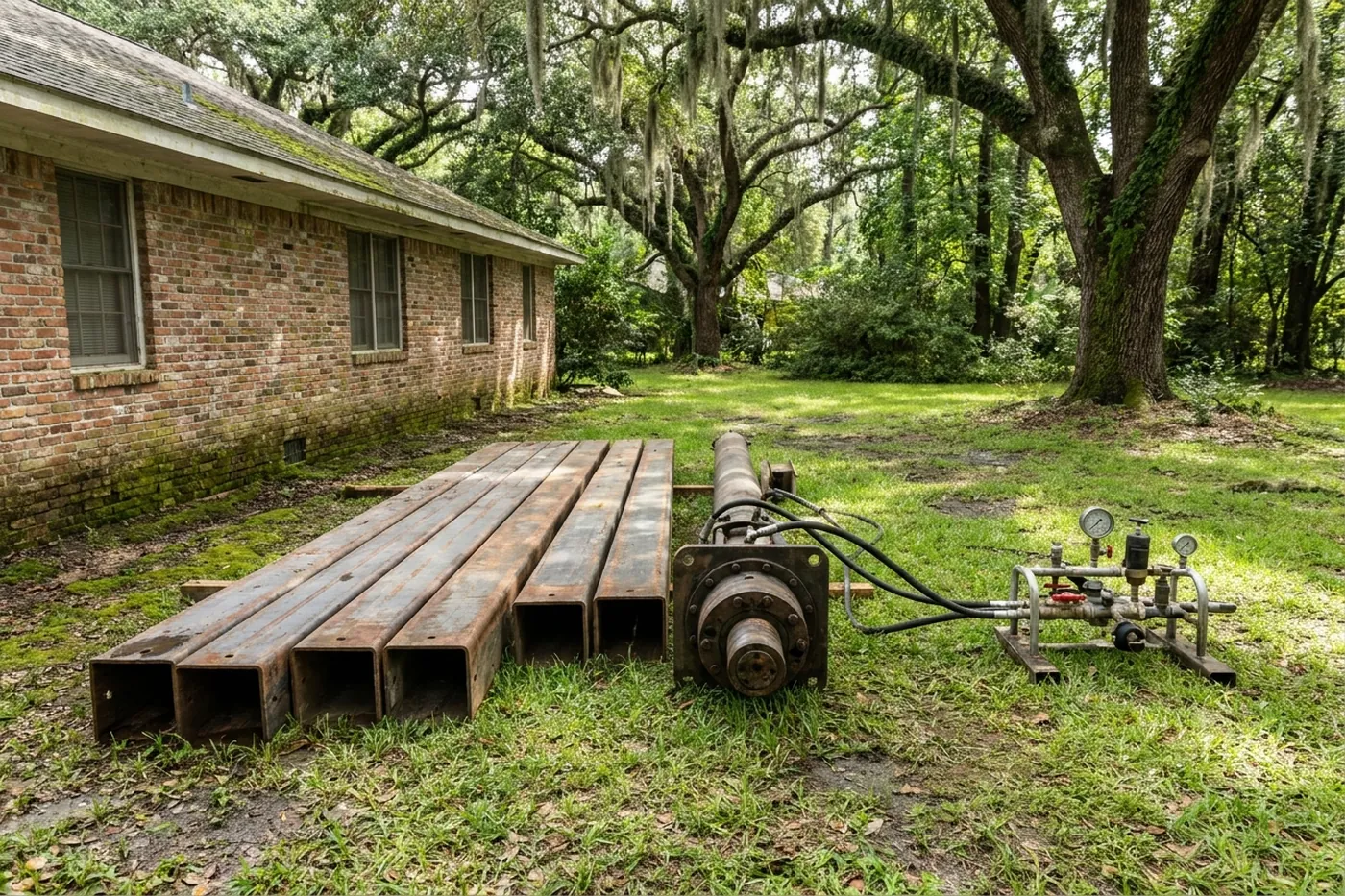
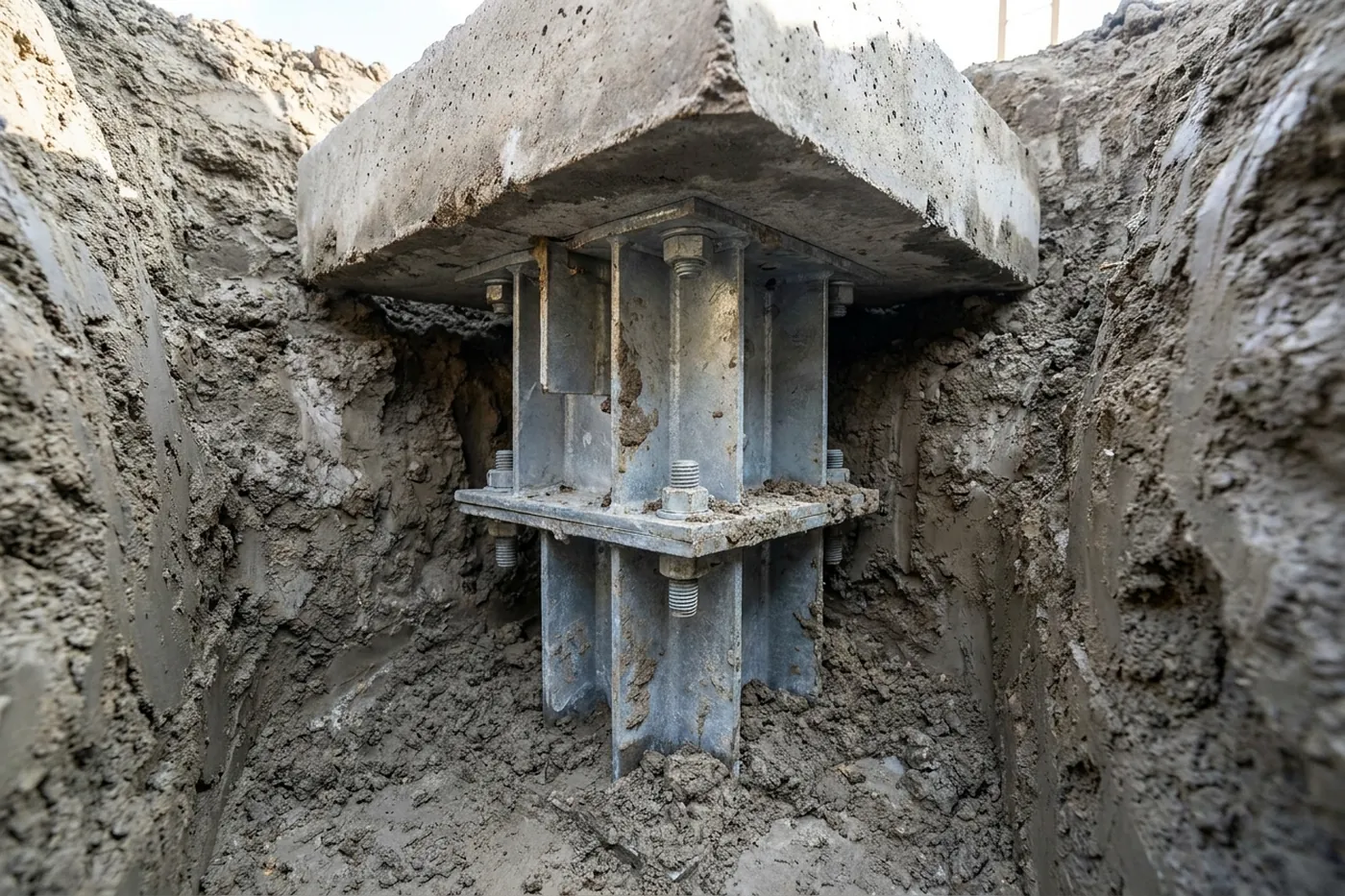
For settlement — the one-directional kind, where the house goes down and stays down: piering, slab repair, or house leveling depending on construction type and how much of the footprint has moved. Where soft clay gives a driven pier little to refuse against, helical piers report their own capacity as they go.
For movement that has already stopped: crack repair and concrete leveling. Both are cosmetic and structural restoration rather than cause treatment, and both are wasted money if bought too early.
Foundation Piering & Underpinning
Steel through soft alluvial clay to something that carries load — after the readings say support is what you need.
Slab Foundation Repair
Most Baton Rouge houses are slab-on-grade, which means the foundation and the floor are the same object.
Foundation Crack Repair
A crack that breathes with the weather and a crack that only ever widens are two different diagnoses.
Drainage Correction
Sixty-two inches a year and a high water table — the standard first move, and the one that tells you what you are dealing with.
Concrete Leveling
Flatwork sinks before the house does. It is the cheapest early reading you will get.
House Leveling
The term most people here actually use — and what it does and does not mean on a slab.
Foundation Settlement Repair
Settlement is one of two things that produce these symptoms. Telling them apart is the whole job.
Does Insurance Cover Foundation Repair?
Usually no, with specific exceptions worth knowing before you file and before you buy.
Cost Guide: Foundation Repair Prices in Baton Rouge
Every job class priced, and the depth assumption that explains quotes differing by thousands.
Which service fixes which problem
| What the house is doing | What it means | The work | Typical range |
|---|---|---|---|
| Cracks widen dry, close wet, every year | Clay cycling with moisture | Drainage correction | $1,500–$6,000 |
| Consistent slope across the footprint | Settlement into soft ground | Piering | $4,000–$15,000 |
| One room low, no water pattern | Possible under-slab leak | Plumbing test, then slab repair | $3,500–$12,000 |
| Crawl space house sitting uneven | Failing supports or soil | House leveling | $3,000–$10,000 |
| Cracks that never change | Old scar, movement finished | Crack repair | $400–$1,500 |
| Sunken drive, patio, or walk | Void under unloaded flatwork | Concrete leveling | $500–$2,500 |
Order of operations
Water first, because it is cheapest and it doubles as a diagnosis. Structure second, where the readings call for it. Cosmetics last, only after a full wet season and a full dry one have passed without movement. Filling cracks on a foundation still in motion, or setting piers while runoff still piles against a wall, is how a household buys the same work twice.
Ask for a scope that follows that order with a figure on each stage, so a budget that stops after stage one has still bought the part that mattered. Full pricing on the cost guide.
Service questions
Which of these services does my house actually need?
The elevation contour decides, and taking it costs nothing. Cracks that breathe with the seasons point at moisture and drainage. A consistent slope across the footprint points at settlement and support. Water standing at a wall points outside. Measure before recommending rather than opening with the largest scope.
Can one company handle both drainage and structural work?
It is why they belong in one scope. On clay taking nearly 62 inches of rain a year, piers installed while water still concentrates against a wall stabilise one section while the rest keeps cycling. Pricing both halves in one document lets you see the sequence and stage it deliberately.
Do you ever recommend doing nothing?
Regularly. If elevations are close to flat and crack widths have not changed through a full wet and dry season, the honest recommendation is to keep measuring. That outcome is written into the assessment the same as any other.
Get a Baton Rouge foundation evaluation
Tell us what the house is doing and roughly when it started — a crack that opens in dry weather and closes after rain reads differently from one that only ever widens. If you know which way the floor falls, say so. That single detail often separates a moisture problem from a ground-movement problem before anyone visits. A local specialist who serves Baton Rouge will call you back.