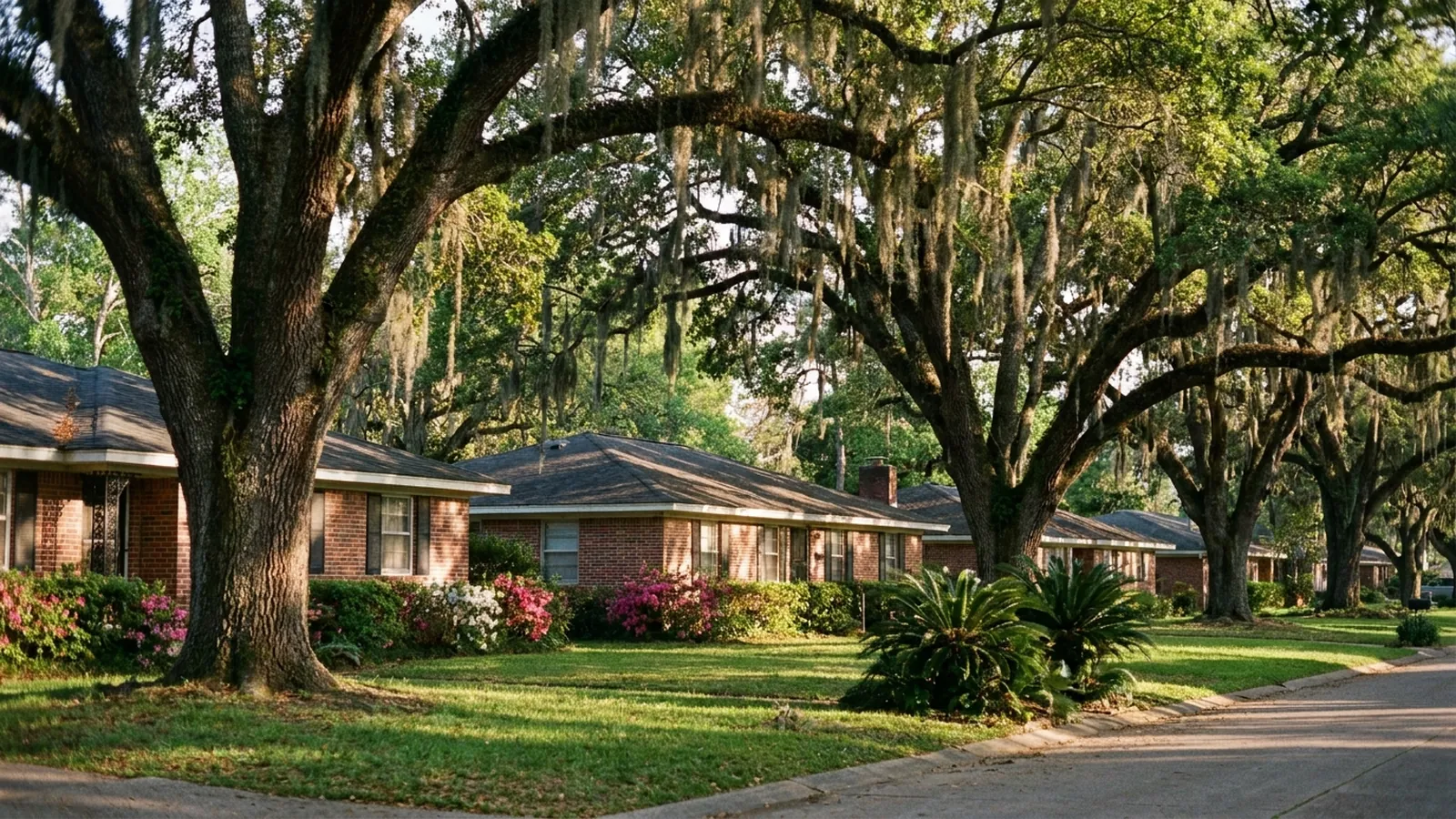
Baton Rouge Foundation Co. serves East Baton Rouge, Livingston, Ascension, West Baton Rouge, and Iberville parishes. Many local specialists don't charge for the evaluation; ask when they call, and ask for floor elevation readings and a written scope that names which parish office permits your work.
Grouped by parish, because permitting is
East Baton Rouge Parish
The city itself plus the north-parish communities. Permitting runs through East Baton Rouge, and this is where the housing stock is most mixed — slab subdivisions and older pier-and-beam streets sometimes within a mile of each other.
Livingston Parish
East of the city and squarely in the corridor that took the worst of the August 2016 flooding. Separate permitting office, and a shared foundation timeline that starts in one week for an unusual share of the housing.
Ascension Parish
The fastest-growing area we serve, and the newest housing. Permits go through Ascension, and a high proportion of foundation questions here belong to a builder warranty before they belong to a contractor.
West bank — West Baton Rouge and Iberville
Across the Mississippi, with river-adjacent alluvial ground and older housing stock. Two more permitting offices, and pier-and-beam construction appears far more often than it does in the eastern suburbs.
Three different stories in one metro
It is worth knowing which one applies to your address before you read a quote.
| Area | Dominant mechanism | What to check first |
|---|---|---|
| Flood corridor — Central, Denham Springs, Walker | Post-saturation consolidation since 2016 | When movement started, and whether it is still active |
| Growth suburbs — Gonzales, Prairieville, Zachary | Recently placed fill still settling | The builder warranty, before hiring anyone |
| River towns — Port Allen, Plaquemine, Baker | Older pier-and-beam, failing supports | Construction type — crawl space or slab |
| City neighbourhoods | Mixed — both of the above appear | Elevation readings across the footprint |
What to ask for at every address
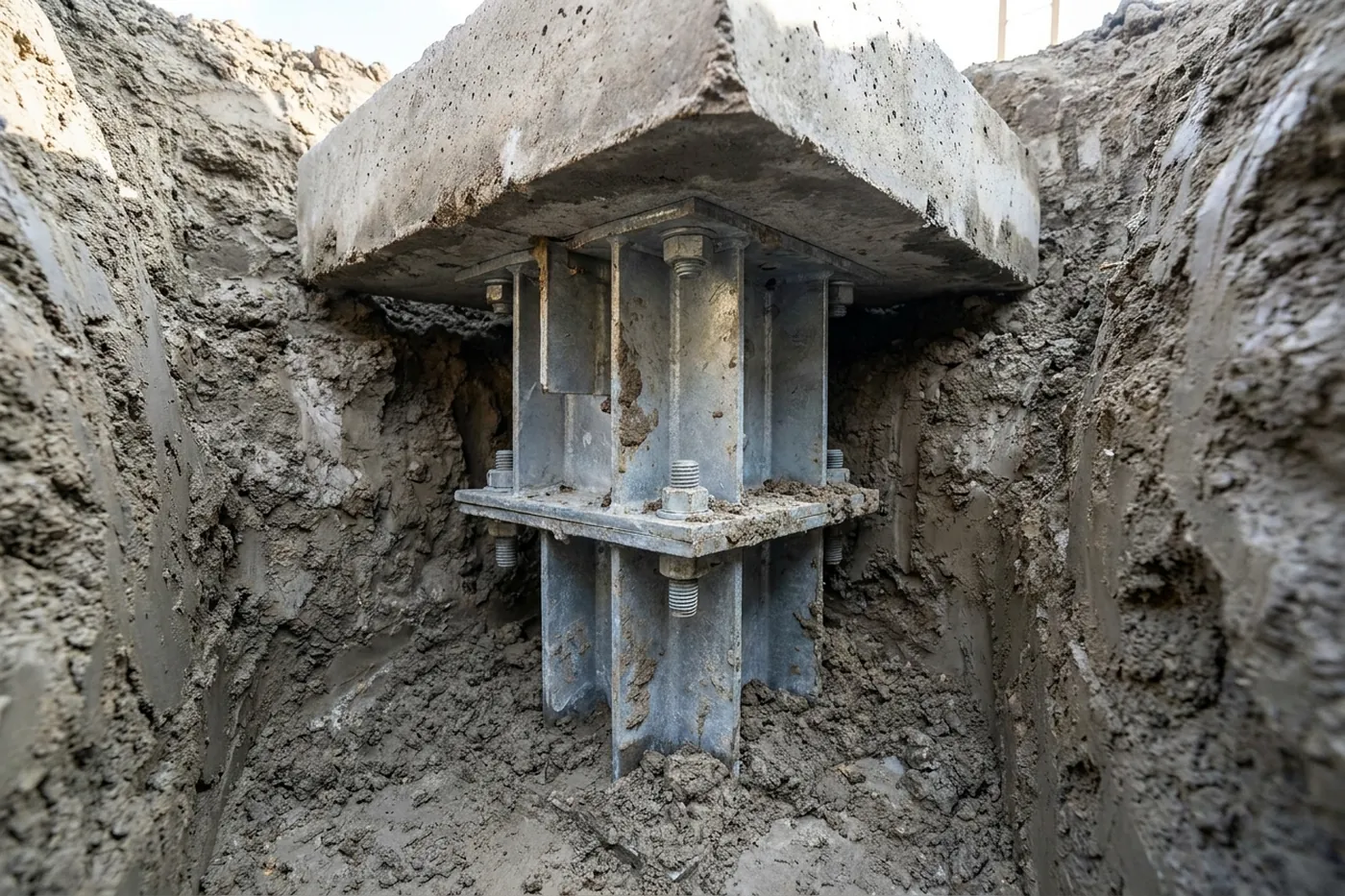
The same evaluation regardless of parish: floor elevations across the whole footprint, dated crack measurements, an exterior water review, and a written assessment naming the mechanism the evidence supports. Ask to keep it. See what the work costs or book a visit.
Service area questions
Is there a charge to travel to the outer parishes?
Many local specialists don't charge for an evaluation anywhere in East Baton Rouge, Livingston, or Ascension parish, or on the west bank. Ask whether travel is charged, and ask for a scope that prices the work rather than the distance. If a competing bid seems high for an outlying address, asking where travel sits in their document is fair.
Why does it matter which parish I am in?
Permitting. Structural work is permitted at parish level, and this site covers five parishes, which means five offices with their own processes. A contractor concentrated in the city does not always account for that. Ask for the permitting office to be named in the scope.
Do foundation problems differ between these areas?
Meaningfully. The flood corridor communities carry post-2016 consolidation. The Ascension suburbs carry young placed fill under young houses. The west bank river towns carry older pier-and-beam construction where the supports fail as often as the soil. Same parish, genuinely different diagnoses.
Every town we cover, and what changes there
Each of these has its own page, because the ground and the housing stock are not the same across the region. The short version:
Zachary — Young subdivisions, young fill
Zachary has taken on sustained residential development, and new subdivisions arrive the same way everywhere: the ground is graded and brought to level before anything is built. Read what that means for a Zachary property.
Baker — Older stock means a different foundation type
Much of Baker's housing is old enough to sit on piers and beams rather than a poured slab. Read what that means for a Baker property.
Central — What saturation does after the water leaves
The August 2016 flooding put water across large parts of Central, and the visible damage was addressed years ago. Read what that means for a Central property.
Denham Springs — A community with a shared timeline
Denham Springs took extraordinary water in August 2016, and an unusual share of its housing stock was affected at once. Read what that means for a Denham Springs property.
Walker — The same saturation story, a different parish
Walker sits in the corridor that took the worst of the August 2016 flooding, and the foundation consequence is the same as its neighbours: soil that was thoroughly saturated releases water slowly, and houses sitting on it can settle for years afterward rather than weeks. Read what that means for a Walker property.
Gonzales — Growth on the corridor
Gonzales sits in one of the fastest-growing parishes in the state, and the residential build-out has been rapid. Read what that means for a Gonzales property.
Prairieville — New enough that the warranty is the first call
Prairieville has grown quickly and much of its housing is genuinely recent. Read what that means for a Prairieville property.
Port Allen — The west bank is its own jurisdiction
Port Allen is in West Baton Rouge Parish, not East Baton Rouge. Read what that means for a Port Allen property.
Plaquemine — Old houses fail at the supports, not only the soil
Plaquemine has housing old enough that pier-and-beam construction is common, and on that construction the diagnosis has two halves. Read what that means for a Plaquemine property.
What it means when we say we cover a town
It means we pass your request to a local specialist for an evaluation at your address, on the same terms as in Baton Rouge. Ask for the same laser floor survey and crack measurements, a written scope afterwards, and travel quoted as its own line rather than buried inside the others. If a job is far enough out that travel is material, ask to see that number before you agree to anything.
Foundation work is scheduled, not urgent — which means an outlying address costs you nothing in response time.
These 9 communities share ground this site covers in enough depth to describe before anyone arrives. That is the honest boundary: not a radius drawn on a map, but the places whose soil and housing stock we explain here.
Coverage questions
Do you charge extra to come out to the outlying towns?
Travel is quoted as its own line when it applies, and you see it before agreeing to anything. It is never folded into the price of the work, because a scope you cannot read is a scope you cannot compare against anyone else's.
My address is not on the list. Do you still come?
Usually, and it is worth asking. The list is the area this site covers in depth, not a hard boundary. Somewhere between two of these towns is almost always a yes.
Is the first visit free, everywhere on this list?
Many local specialists don't charge for the first visit, but it depends on the company. Ask when the specialist calls, before they come out. Ask for the laser floor survey, crack measurements and written findings whether or not you go ahead, and whether or not the specialist ends up quoting the work.
Why does the price differ between towns for the same job?
Because the ground does. Each town page above explains what changes locally, and the quote follows what the visit measures at your specific address rather than an average for the region.
Get a Baton Rouge foundation evaluation
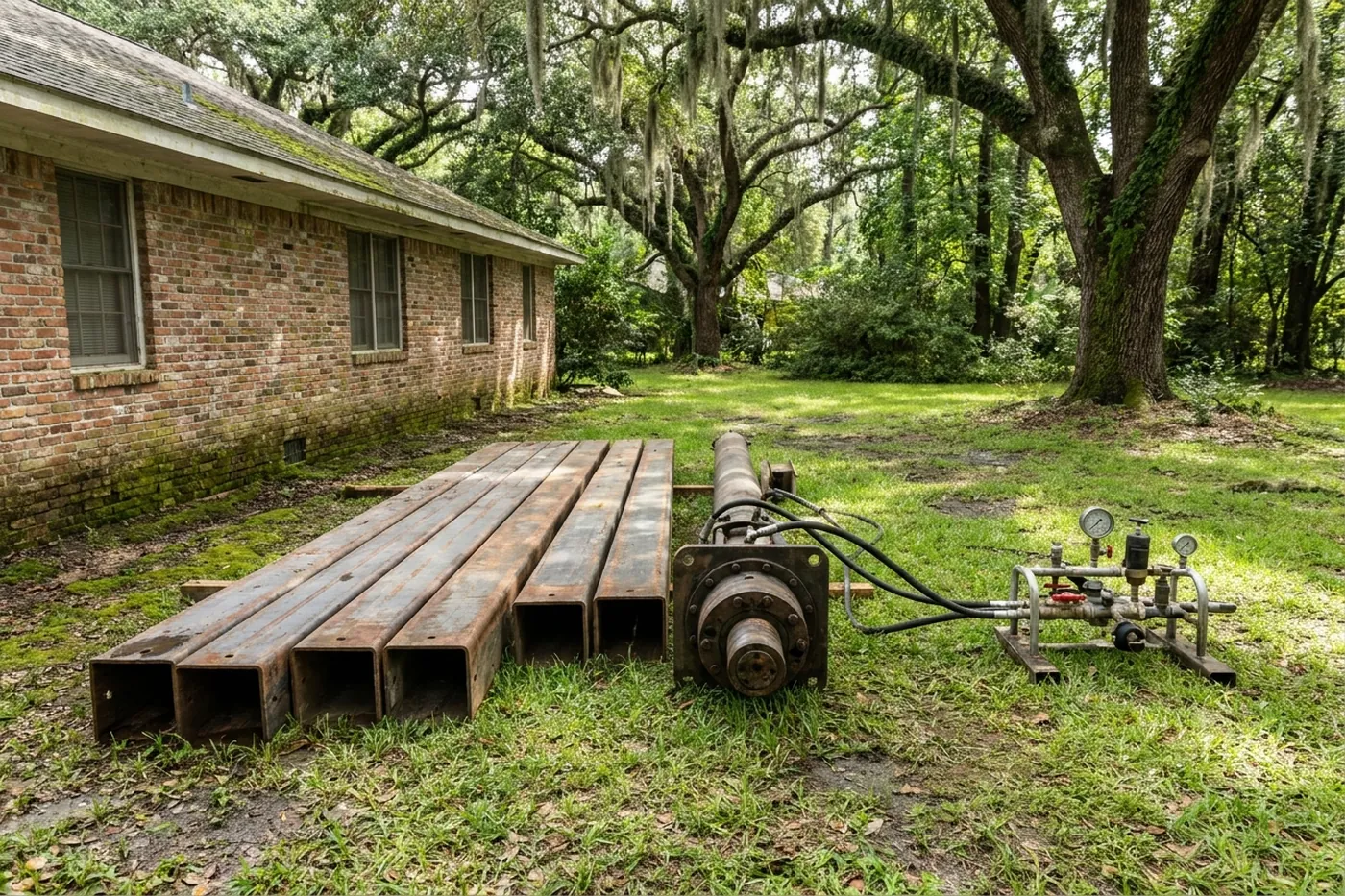
Tell us what the house is doing and roughly when it started — a crack that opens in dry weather and closes after rain reads differently from one that only ever widens. If you know which way the floor falls, say so. That single detail often separates a moisture problem from a ground-movement problem before anyone visits. A local specialist who serves Baton Rouge will call you back.