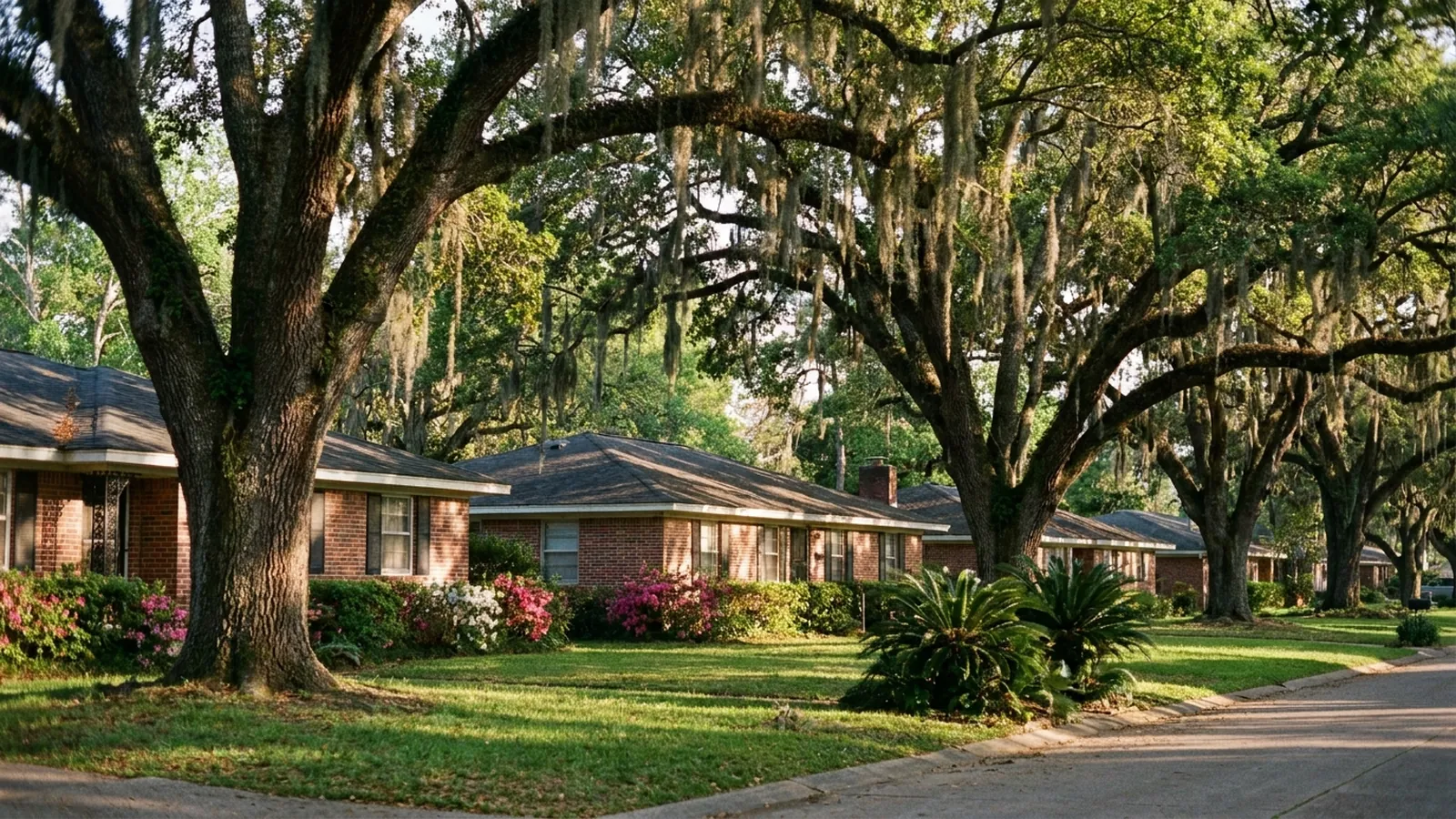
Slab foundation repair in Baton Rouge runs $3,500–$12,000. Because a high water table makes basements impractical here, most houses are slab-on-grade — the foundation and the finished floor are one object, so movement shows up underfoot before it shows up anywhere else.
How to read a slab crack, what separates a $3,500 repair from a $12,000 one, and the leak that hides underneath.
The slab is the floor, which changes what you can see
A house over a crawl space gives you somewhere to look. A slab does not. The concrete that carries the walls is the same concrete under your tile, so the first evidence of movement is usually cosmetic — a hairline running across a room, grout lines opening, a door that suddenly drags.
That has one useful consequence. Slab symptoms arrive early and in plain view. A homeowner paying attention gets a signal well before anything structural is at risk, provided they treat the signal as information rather than as something to patch.
Reading the crack rather than filling it
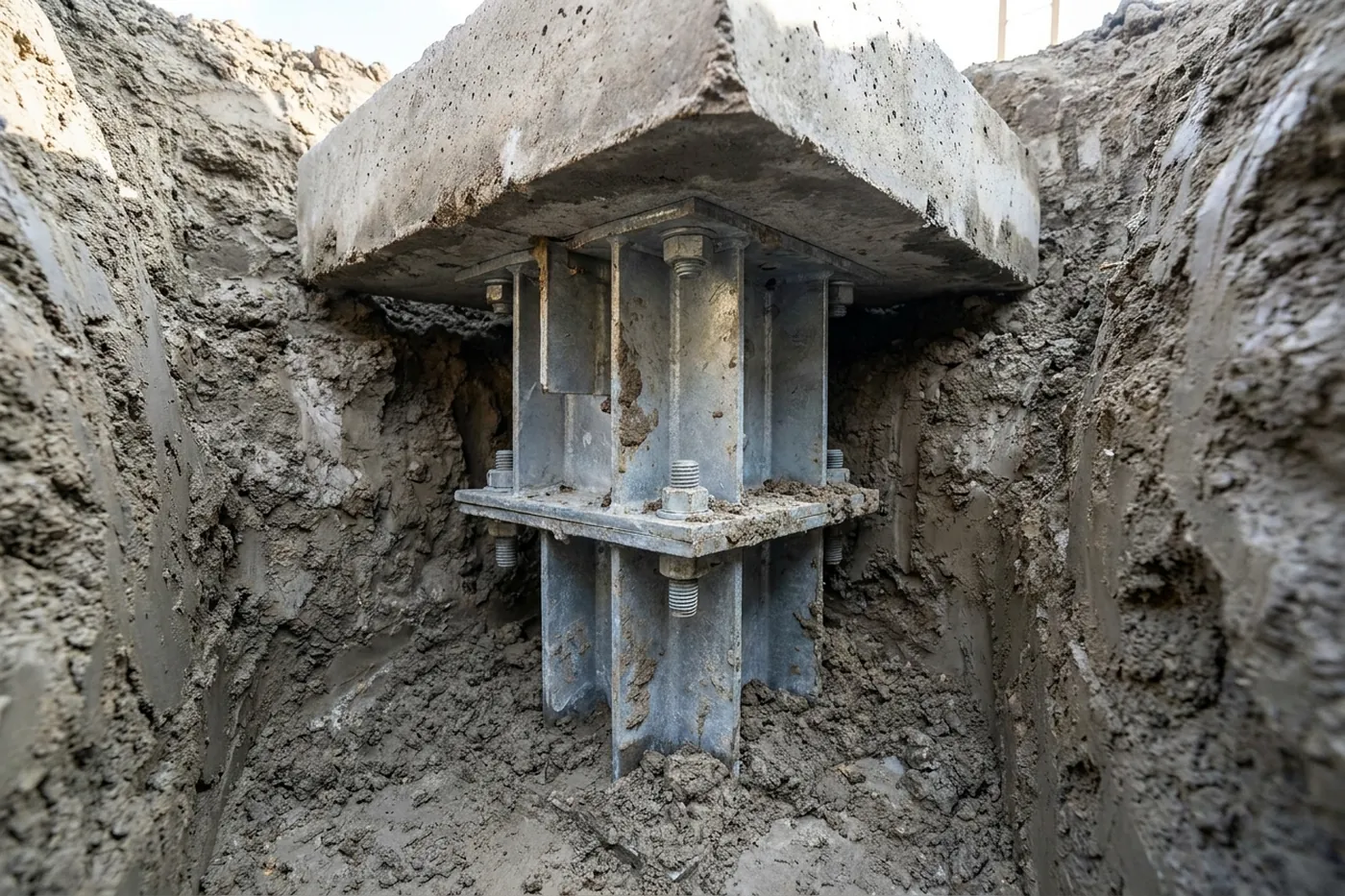
Three properties tell you most of what you need. Width — fine cracks from curing shrinkage are normal and static. Offset — if one side sits higher than the other, the ground beneath the two sides is doing different things. Behaviour over time — whether it moves with the seasons or only ever grows.
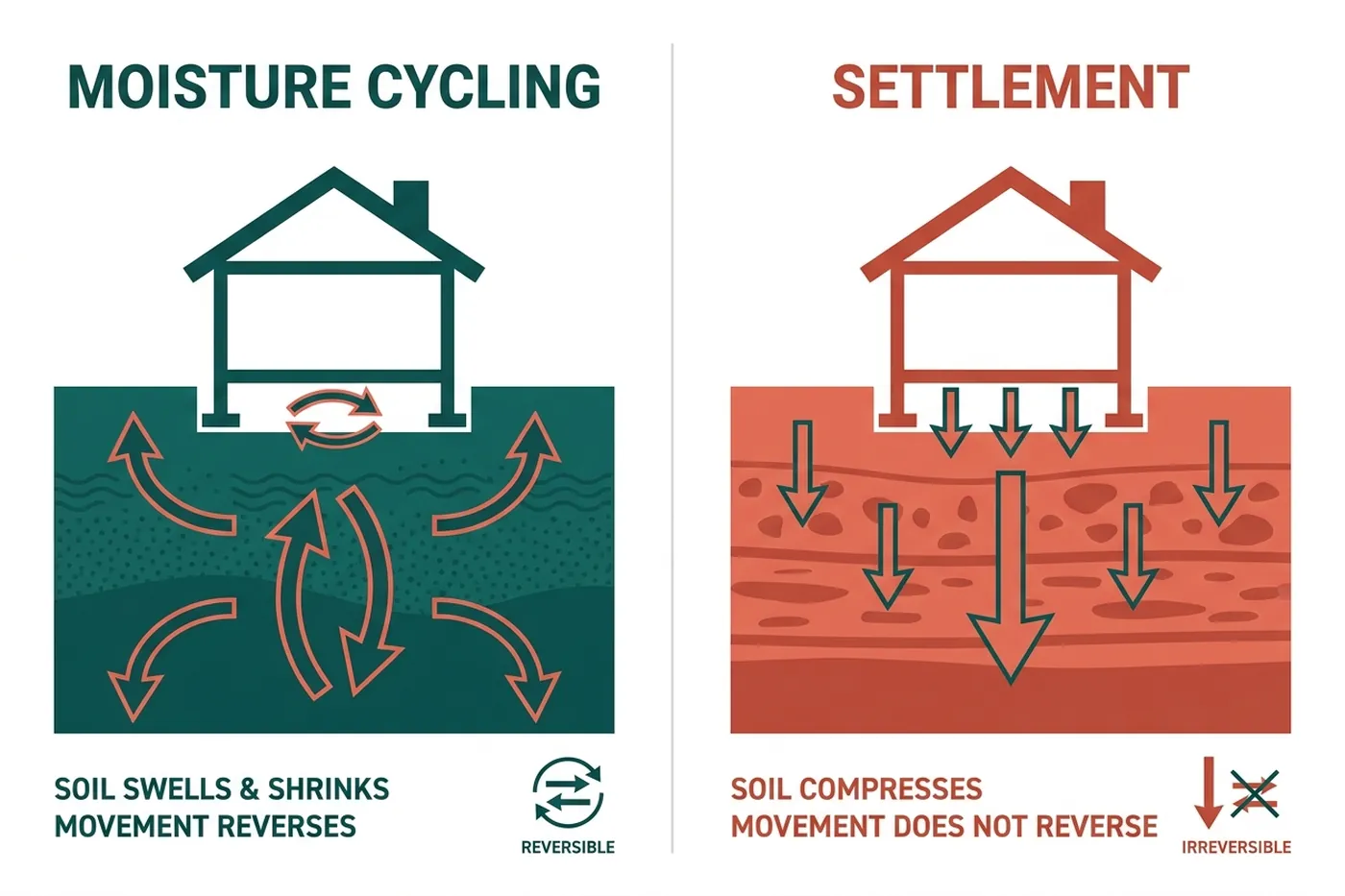
That last one is the diagnostic that matters most in this parish. A crack that widens through a dry spell and closes after a wet one is clay responding to moisture, and that responds to drainage correction. A crack that only ever widens, in one direction, regardless of the weather, is reporting something that will not be fixed by managing water. Marking a crack with a dated pencil line and measuring it monthly costs nothing and separates those two cases better than any single visit can.
What moves a slab repair from $3,500 to $12,000
| Situation | What the work involves | Typical range |
|---|---|---|
| One corner or one room affected | Localised support under the moving section | $3,500–$6,000 |
| One side of the house low | A pier line along the affected edge | $6,000–$10,000 |
| Movement across most of the footprint | Full perimeter underpinning — effectively a piering job | $10,000–$15,000+ |
| Cracks static, elevations flat | Crack repair only, once movement has stopped | $400–$1,500 |
| Movement tracking a suspected leak | Plumbing test before any structural work | Test cost only |
The leak nobody can see
A supply or drain line failing beneath a slab puts water directly into the clay under one part of the house, and does it continuously. The resulting movement is often tight and localised in a way that drainage patterns do not explain — one room low, everything else flat, no relationship to where rainwater goes.
Where the pattern looks like that, a plumbing test is the cheaper move by a wide margin. Installing piers under a section that is soft because it is being watered from below fixes the elevation and leaves the cause running.
Slab repair — the short version
What does slab foundation repair cost in Baton Rouge?
Slab repairs commonly run $3,500-$12,000 depending on how much of the slab has moved and how deep support has to go. Partial work on one affected section sits at the low end. A slab moving across most of its area is priced closer to a full underpinning job because that is effectively what it becomes.
Why are so many Baton Rouge houses slab-on-grade?
A high water table makes basements impractical across most of the parish, so the slab is both the foundation and the finished floor. That has a consequence worth knowing: when the foundation moves, you are standing on the damage. There is no crawl space between you and the problem to absorb it.
Is a crack in my slab serious?
Width and behaviour matter more than length. Fine shrinkage cracks appear as concrete cures and stay put. A crack that keeps widening, offsets vertically so one side sits higher, or reopens after being filled is reporting movement underneath and should be measured over time rather than filled and forgotten.
Can a slab be lifted back to level?
Sometimes, and it should be a deliberate decision rather than an assumption. Recovering elevation can close some cracks and open others, and on a slab carrying tile or stone it can crack finishes. Ask for a lift target in writing (stabilise where it sits, or recover a defined amount) so you choose knowingly.
Do plumbing leaks cause slab movement here?
They can, and under a slab the leak is invisible until the movement shows. A supply or drain line losing water beneath a slab saturates the clay directly under one area, which softens locally. Where the movement pattern is tight and unexplained by drainage, a plumbing test is cheaper than a pier.
Get a Baton Rouge foundation evaluation
Tell us what the house is doing and roughly when it started — a crack that opens in dry weather and closes after rain reads differently from one that only ever widens. If you know which way the floor falls, say so. That single detail often separates a moisture problem from a ground-movement problem before anyone visits. A local specialist who serves Baton Rouge will call you back.