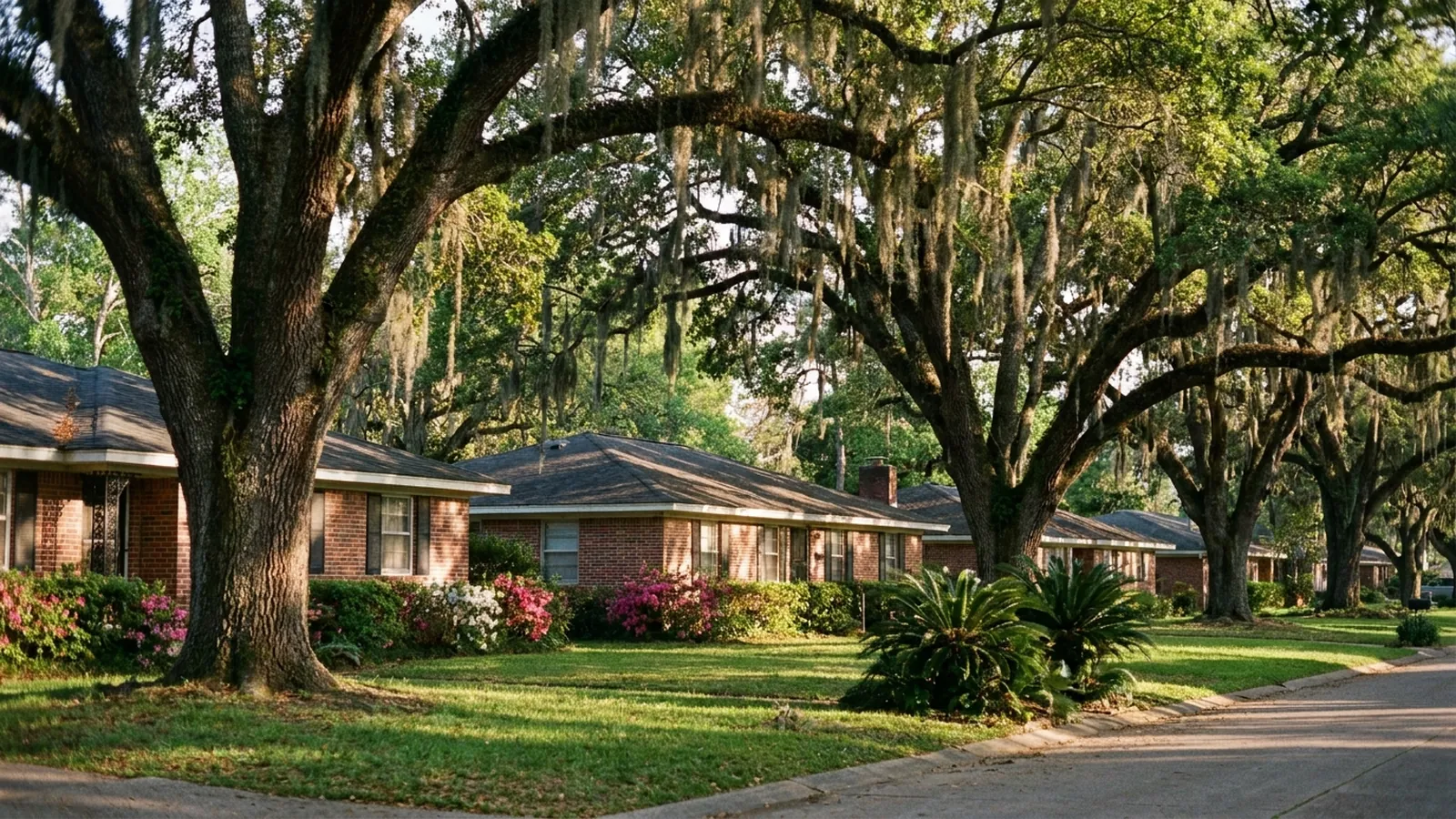
Drainage correction in Baton Rouge runs $1,500–$6,000. With 60.65 inches of rain a year (NWS 1991–2020 normals) falling on clay that swells and shrinks with moisture, it is both the cheapest structural intervention and the one that reveals whether moisture was the cause at all.
Why water management comes first here, what it can and cannot do against a high water table, and how to read the result.
The cheapest fix is also the best diagnostic
Clay soils change volume with water content. They swell when saturated and shrink as they dry, and a foundation sitting on them rises and falls fractionally with that cycle. Over 62 inches of annual rainfall punctuated by dry stretches, that is a great deal of cycling.
Control where roof and surface water goes and you reduce the size of the swing. If the movement settles down, moisture was driving it, and you have solved the problem for a fraction of what underpinning costs. If the movement continues unchanged, that result is itself worth the money — you have ruled out the most common cause and narrowed what remains.
What drainage cannot do, stated plainly
Two limits are worth being clear about, because the industry is not always.
Drainage manages surface and roof water. It does not lower a regional water table, and in a parish with a high one that distinction matters. What surface work changes is the sharpness of the wet-dry swing at the top of the soil profile, which is the part the foundation feels most.
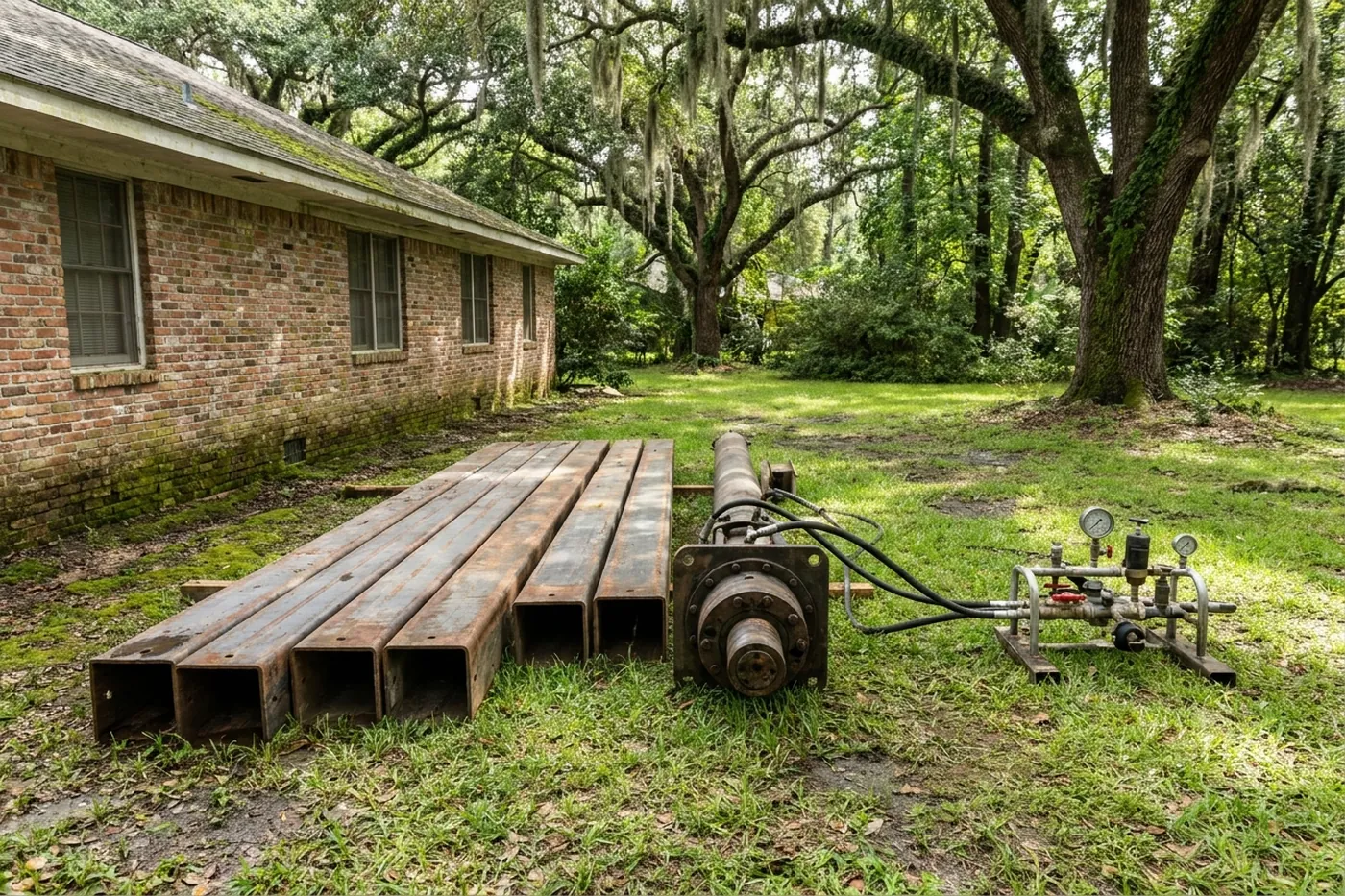
And drainage stops things getting worse; it does not recover elevation already lost. A house that has settled an inch does not come back up because the gutters now discharge properly. Where readings show real settlement has occurred, water management is a necessary companion to structural work, not a substitute for it.
What the work involves
| Measure | What it addresses | Typical range |
|---|---|---|
| Downspout extensions | Roof water dumping at the foundation line | $150–$600 |
| Regrading the first ten feet | Ground that falls back toward the house | $800–$2,500 |
| French drain, one side | Water arriving from a specific direction | $2,000–$4,500 |
| Full perimeter system with discharge | Water standing against several sides | $4,000–$6,000 |
| Discharge relocation | A system that currently empties too close to the house | $500–$2,000 |
The discharge point is the line most often skipped. A drain that collects water competently and releases it eight feet from the wall has moved the problem, not solved it.
Reading the result after a wet season
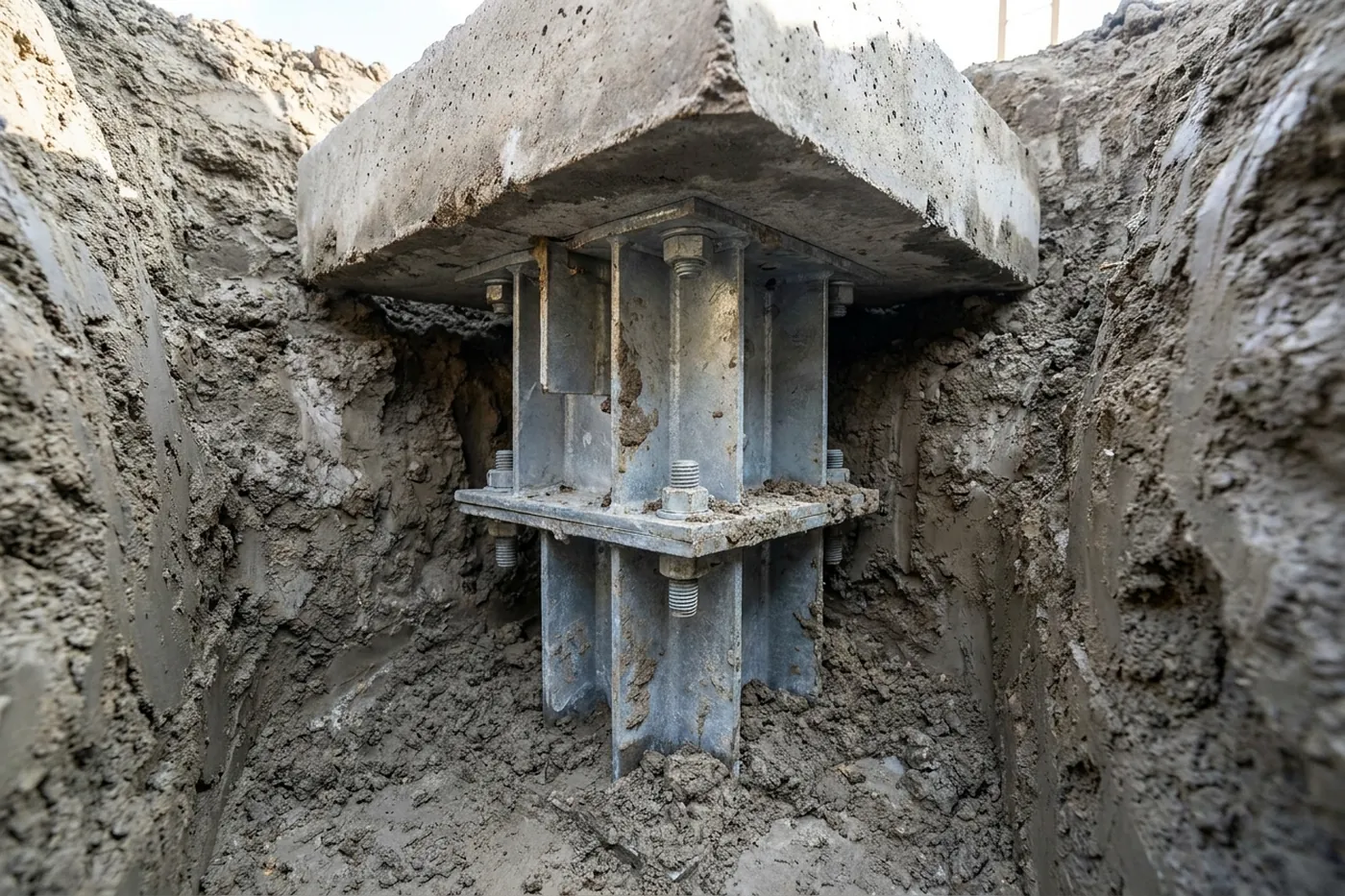
Give any drainage work a full wet season before judging it, and take elevation readings before and after. Three outcomes are possible and all three are useful: movement stops, movement slows, movement continues unchanged. Only the first means you are finished, but the third is the one that saves the most money, because it tells you to stop buying water solutions and start looking at what is under the house.
After regional flooding the timing changes. Saturated ground needs months to give up water, and readings taken while it is still draining will move on their own. Take them anyway, then repeat — the difference between the two sets is the real signal.
Drainage — the short version
What does drainage correction cost in Baton Rouge?
Drainage work runs $1,500-$6,000 depending on how far water has to be carried and what stands in the way. Regrading and extending downspouts sits at the low end. A French drain around an affected side, discharging somewhere that actually falls away, sits at the upper end.
Why is drainage the first thing you recommend?
Because it is the cheapest move that also produces a diagnosis. Baton Rouge takes 60.65 inches of rain a year onto clay that responds to moisture. If controlling water quiets the movement, the cause was moisture. If it does not, you have learned something worth far more than the cost.
Does drainage work with a high water table?
Surface drainage and groundwater are different problems. Managing roof and surface water still matters because it drives the sharp wet-dry swings the clay responds to. What drainage cannot do is lower a regional water table, and a company promising that is promising something it cannot deliver.
What about after a flood?
Regional flooding, including the August 2016 event, saturated soils across the parish and was followed by a wave of settlement claims. After a flood the ground needs time to give up water before elevations mean much. Take readings, then take them again months later - the change between them is the real information.
Will drainage alone fix my foundation?
Where movement is moisture-driven and elevations are still close to flat, often yes. Where the house has already settled measurably, drainage stops it getting worse but does not recover what has been lost. That is the honest split, and elevation readings are what put a given house on one side of it.
Get a Baton Rouge foundation evaluation
Tell us what the house is doing and roughly when it started — a crack that opens in dry weather and closes after rain reads differently from one that only ever widens. If you know which way the floor falls, say so. That single detail often separates a moisture problem from a ground-movement problem before anyone visits. A local specialist who serves Baton Rouge will call you back.