Foundation crack repair in Baton Rouge runs $400–$1,500 — a price that assumes the movement causing the crack has stopped. Sealing a crack on a foundation still in motion is the most common way a homeowner here buys the same repair twice.
How to read a crack over time, the two patterns that mean completely different things, and when filling is the right move.
The crack is a symptom with a memory
Concrete and masonry crack when something beneath them moves differently from something else beneath them. The crack itself is the report. Repairing it restores appearance and keeps water out; it does not address whatever produced it, and it is only a durable repair once that cause has gone quiet.
Which is why the useful question is never "how bad does this look" but "what has it been doing". A quarter-inch crack that has not changed in a year is in better shape than a hairline that has doubled since spring.
Two patterns, two entirely different diagnoses
This is the distinction that matters most in this parish, and it is one a homeowner can establish without paying anybody.
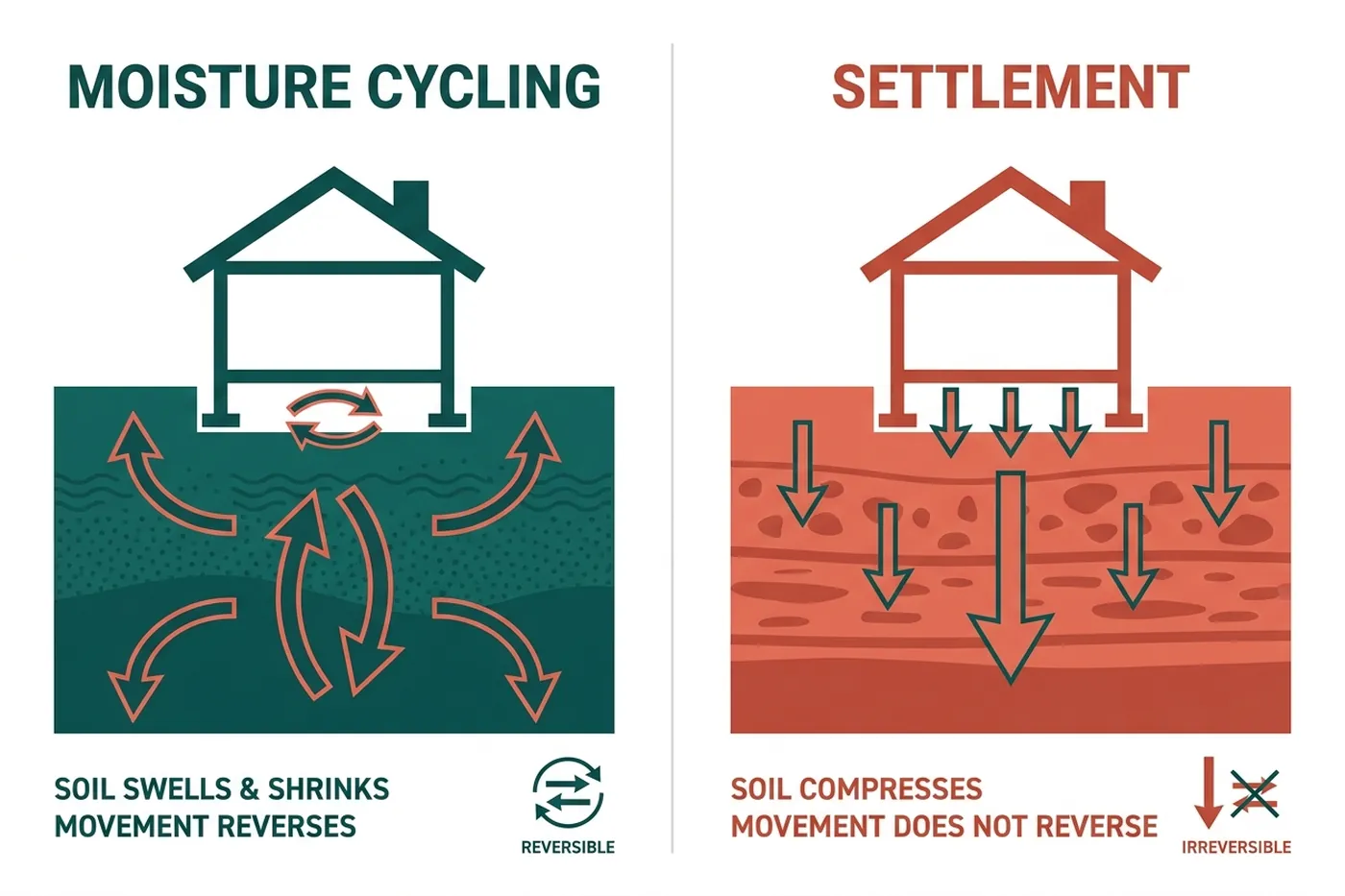
A crack that breathes. Wider through a dry spell, narrower after a wet one, year after year. That is clay taking on and giving up water, and the foundation moving with it. It is common in soft alluvial clay under 60.65 inches of rain a year, and the first thing that changes it is where the water goes.
A crack that only widens. Progressing in one direction, indifferent to the weather, never recovering. Moisture cycling reverses by definition, so a crack that never reverses is not moisture cycling. That points toward settlement or ground displacement — and those two are separated by elevation readings across the whole footprint, not by looking at the crack.
How to measure one properly
- Mark both ends with a dated pencil line so future growth is visible at a glance
- Record the width at the widest point, in millimetres, with the date beside it
- Photograph it against a ruler in the same lighting each time
- Re-measure monthly for at least one full wet season and one dry one
- Note whether one side sits proud of the other, and whether that offset changes
Six months of that record is worth more to a diagnosis than any single site visit, and it is the one piece of evidence no contractor can produce for you after the fact.
When filling is the right call
| What you have | Right move | Typical cost |
|---|---|---|
| Fine crack, unchanged for a year | Fill it — cosmetic and water exclusion | $400–$800 |
| Wider crack, movement confirmed stopped | Structural injection or carbon fibre | $800–$1,500 |
| Crack that breathes with the seasons | Drainage first, fill after a full cycle | $1,500–$6,000 |
| Crack that only ever widens | Elevations across the footprint before anything is filled | Often free |
| Vertical offset between the two sides | Structural evaluation — do not fill first | Often free |
Filling last rather than first is not a delay tactic. It is the order that keeps you from paying for the same crack twice, and it costs nothing to follow.
Cracks — the short version
What does foundation crack repair cost in Baton Rouge?
Crack repair runs $400-$1,500 for most work. That price assumes the movement that caused the crack has stopped. Filling a crack on a foundation still moving is the most common way a homeowner here pays for the same repair twice, so the measurement history matters more than the injection method.
How do I tell a serious crack from a harmless one?
Watch it rather than judging it once. Mark both ends and the width with a dated pencil line and re-measure monthly. A crack that stays put through a wet season and a dry one is a scar. One that widens, or that opens and closes with the weather, is still reporting active movement underneath.
What does it mean if a crack opens and closes with the weather?
It usually means clay responding to moisture rather than the house settling. Soil swells when it takes on water and shrinks when it dries, and the foundation follows. That pattern points at drainage as the first fix, because managing where water goes changes how hard the clay swings.
What if the crack only ever gets wider?
A crack that widens in one direction and never recovers is not moisture cycling, because moisture cycling reverses. That points at settlement or ground displacement, and the difference between those two determines whether underpinning is the answer. This is the case where elevations across the whole footprint earn their keep.
Should I fill cracks myself?
For a fine static crack in a slab, a consumer-grade filler is reasonable. For anything wider than about a quarter inch, anything with vertical offset, or anything you have watched change, filling it first destroys the measurement history a diagnosis depends on. Measure for a season, then decide.
Get a Baton Rouge foundation evaluation
Tell us what the house is doing and roughly when it started — a crack that opens in dry weather and closes after rain reads differently from one that only ever widens. If you know which way the floor falls, say so. That single detail often separates a moisture problem from a ground-movement problem before anyone visits. A local specialist who serves Baton Rouge will call you back.