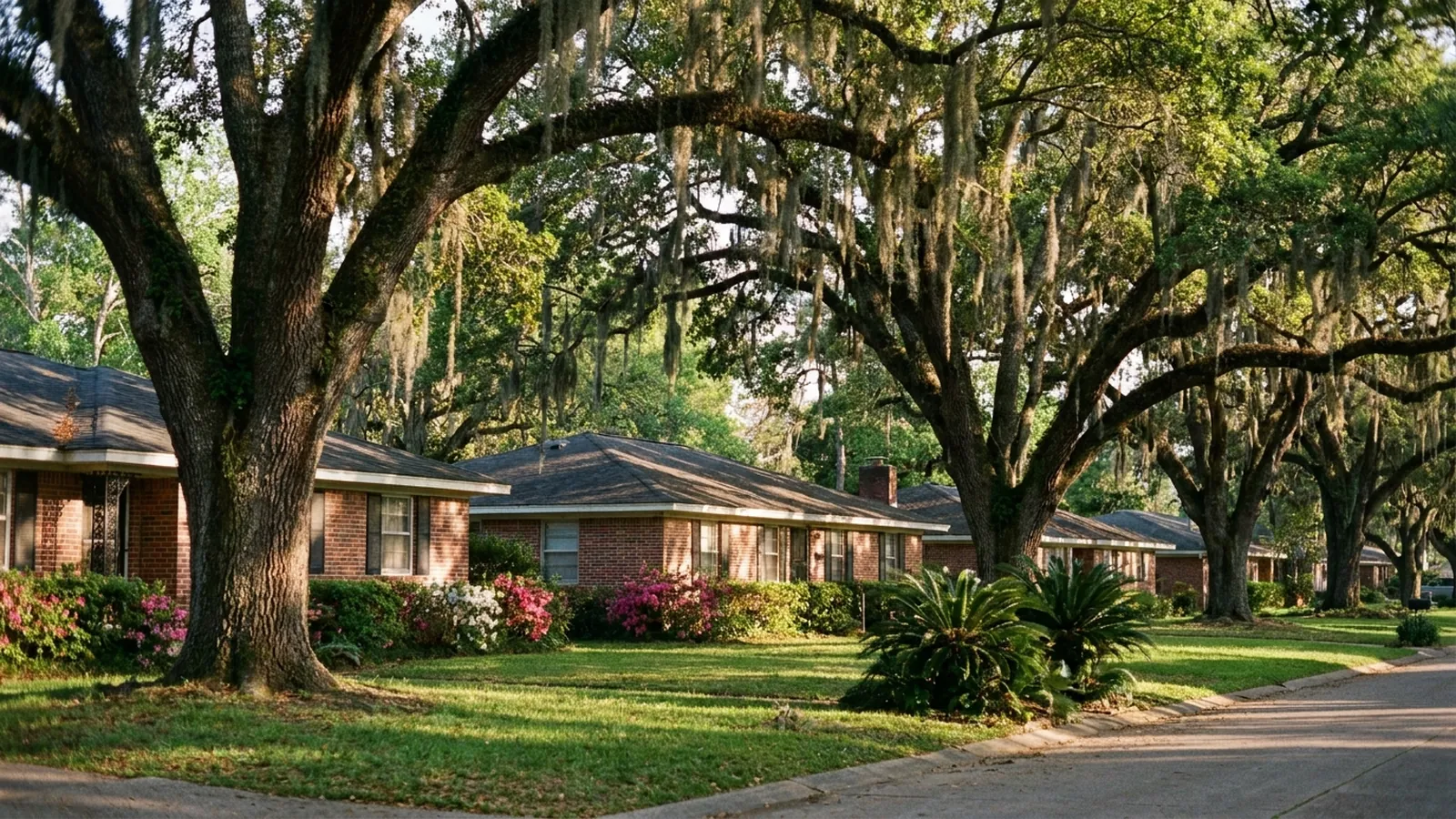
Foundation piering in Baton Rouge runs $4,000–$15,000 for most repairs, piers commonly $1,200–$3,000 each. In soft alluvial clay the cost driver is depth to competent bearing, not pier count — so a bid without a written depth assumption cannot be compared to another one.
What piering does and does not address in this parish, why depth is the number that moves the price, and the six lines that belong in a bid.
What underpinning actually treats
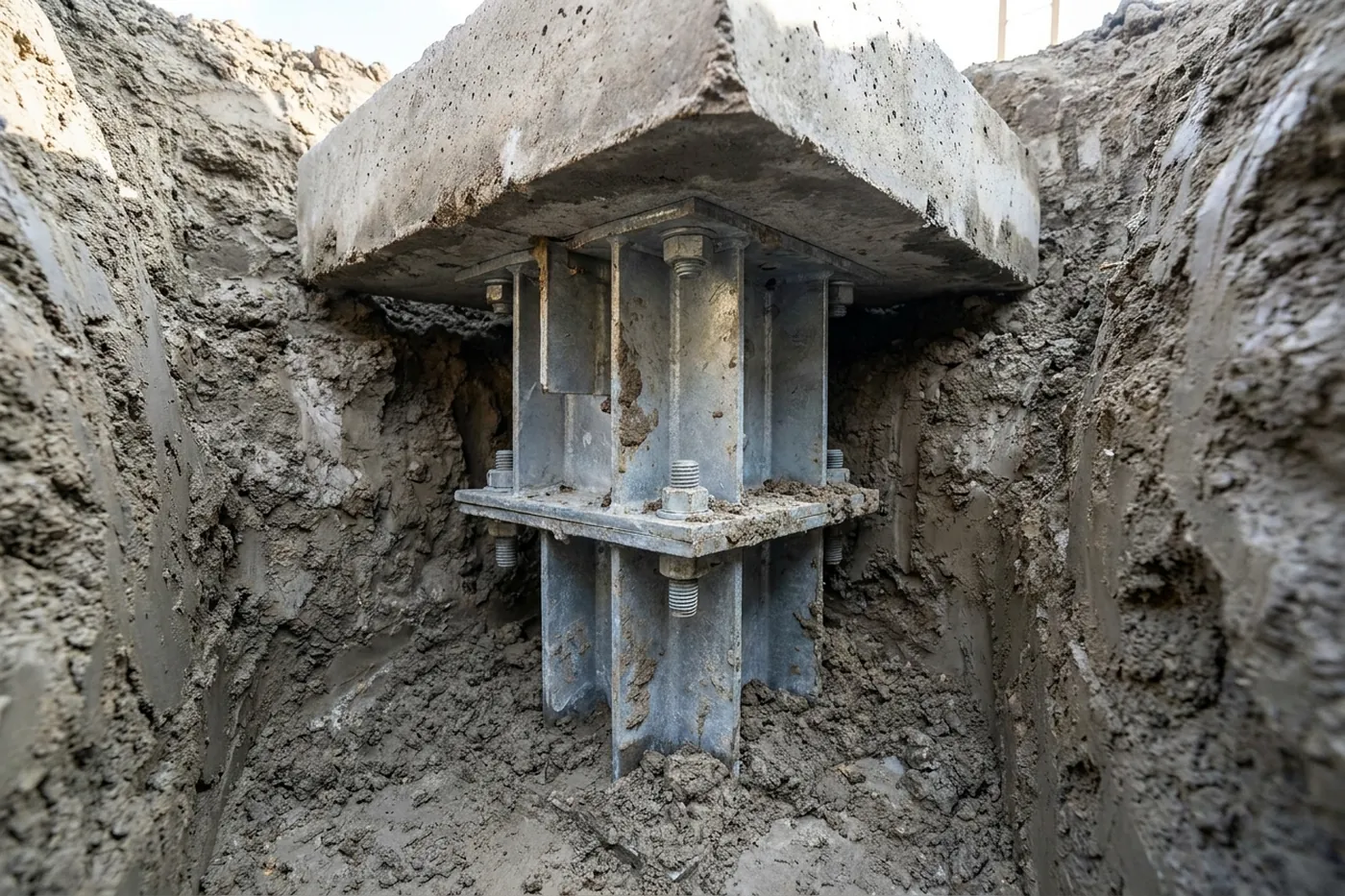
Piering is a remedy for one thing: a structure settling into ground that will not carry it. Steel is advanced through the soft material until it reaches something that will, and the load transfers onto that steel. Where that is the problem, it is a durable fix.
It is worth being precise about the limit, because it is the honest part. Underpinning transfers a building's load deeper. It does not stabilise the wider ground, and no contractor can promise it does. If the readings point somewhere other than settlement, piers are the wrong purchase — and in this parish that is a live possibility rather than a hypothetical, which is why elevations should be taken across the whole footprint before a scope is written.
Depth is the number that decides the price
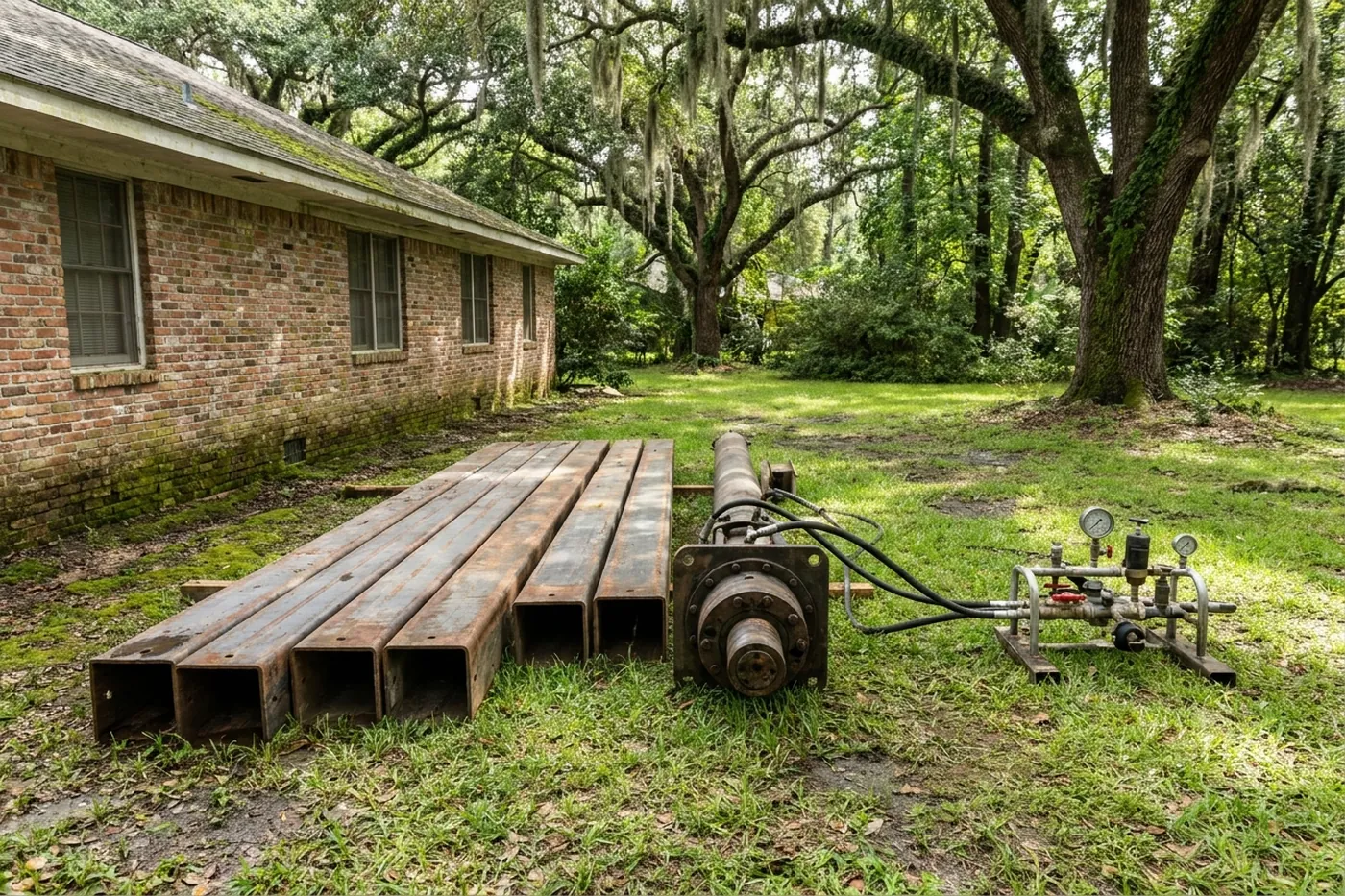
Baton Rouge sits on soft alluvial and deltaic clays with a high water table. How far down competent bearing sits varies across the parish and sometimes across a single street, and that distance is the single largest driver of what a pier costs.
This is why two bids on the same house can differ enormously and both be honest. One may assume piers reach bearing at a modest depth; the other may have assumed further and priced accordingly. Neither is wrong until you know which assumption each made. Ask both bidders for the assumed depth and the per-foot rate beyond it, and the two numbers become comparable for the first time.
The pier log is the document that matters
Most homeowners compare bids on pier count. The more revealing record is what each pier landed on. Alluvial ground contains firmer lenses that feel like bearing to a hydraulic ram and are not, and a pier that stopped in one behaves exactly like a properly founded pier right up until it does not.
Ask every bidder for a per-pier log recording depth reached and termination material. A company that records those is telling you it expects to be checked, which is most of what you can learn about a contractor before the work starts.
Piering compared with the alternatives
| Approach | Typical cost | Right when |
|---|---|---|
| Push piers | $1,200–$3,000 per pier | Heavier masonry with the mass to drive to refusal, and readings showing real settlement |
| Helical piers | $1,400–$3,200 per pier | Soft soils where refusal is not crisp, or light structures, porches, and additions |
| Drainage correction first | $1,500–$6,000 | Elevations close to flat and symptoms clearly tracking rainfall |
| Slab-specific repair | $3,500–$12,000 | Movement confined to part of a slab rather than the whole footprint |
| Monitoring, no work yet | No repair cost | Readings flat and crack widths unchanged across a full wet and dry cycle |
Six things that belong in a Baton Rouge pier bid
- Floor elevations taken across the entire footprint, not only beside the damaged wall
- A pier layout justified by those readings rather than by the location of the visible crack
- A stated depth assumption and a written per-foot rate beyond it
- A commitment to per-pier logging of depth and termination material
- The lift target stated plainly — stabilise in place, or recover a defined amount
- The license class the company holds for your project's bracket, and its LSLBC number
If the readings turn out not to support piering at all, that belongs in the document too. See how the ranges break down on the Baton Rouge cost guide.
Piering — the short version
What does foundation piering cost in Baton Rouge?
Most full repairs run $4,000-$15,000, with individual piers commonly $1,200-$3,000 each. In soft alluvial clay the count is driven less by how much of the house is affected than by how deep competent bearing sits, which varies sharply across the parish. Insist on a written depth assumption before comparing two bids.
How deep do piers have to go here?
Deep enough to pass through soft alluvial and deltaic clay and reach material that carries load without continuing to consolidate. That depth is genuinely variable in this parish, which is why a quoted price without a stated depth assumption is not a price. Ask for the assumption and the per-foot rate beyond it.
Will piers fix movement caused by ground displacement?
Piers address a house that is settling into soft ground. They are not a remedy for regional ground movement, and no contractor can honestly promise otherwise. This is exactly why the diagnosis matters first: the same symptoms can come from two causes, and only one of them is something underpinning addresses.
What should a pier log actually say?
Depth reached and what the pier terminated on. In alluvial ground those two entries are the whole record - a pier that stopped in a firmer clay lens is not the same as a pier that reached material that will carry the house indefinitely, and only the log tells you which one you paid for.
Push piers or helical piers?
Driven piers use the building's own weight to push down to refusal, which suits heavier masonry. Helicals are rotated in to a target torque, producing a capacity reading at every stage of the descent - useful in soft soils where refusal is not crisp, and the only workable option under porches, additions, and light framing that cannot supply reaction load.
Does my project need a licensed contractor?
Louisiana requires a Home Improvement Registration for residential projects from $7,500 to $50,000, and a Residential or Commercial license above $50,000. Most full piering jobs land in one of those two brackets, so ask which credential the company holds and confirm it with the Louisiana State Licensing Board for Contractors.
Get a Baton Rouge foundation evaluation
Tell us what the house is doing and roughly when it started — a crack that opens in dry weather and closes after rain reads differently from one that only ever widens. If you know which way the floor falls, say so. That single detail often separates a moisture problem from a ground-movement problem before anyone visits. A local specialist who serves Baton Rouge will call you back.