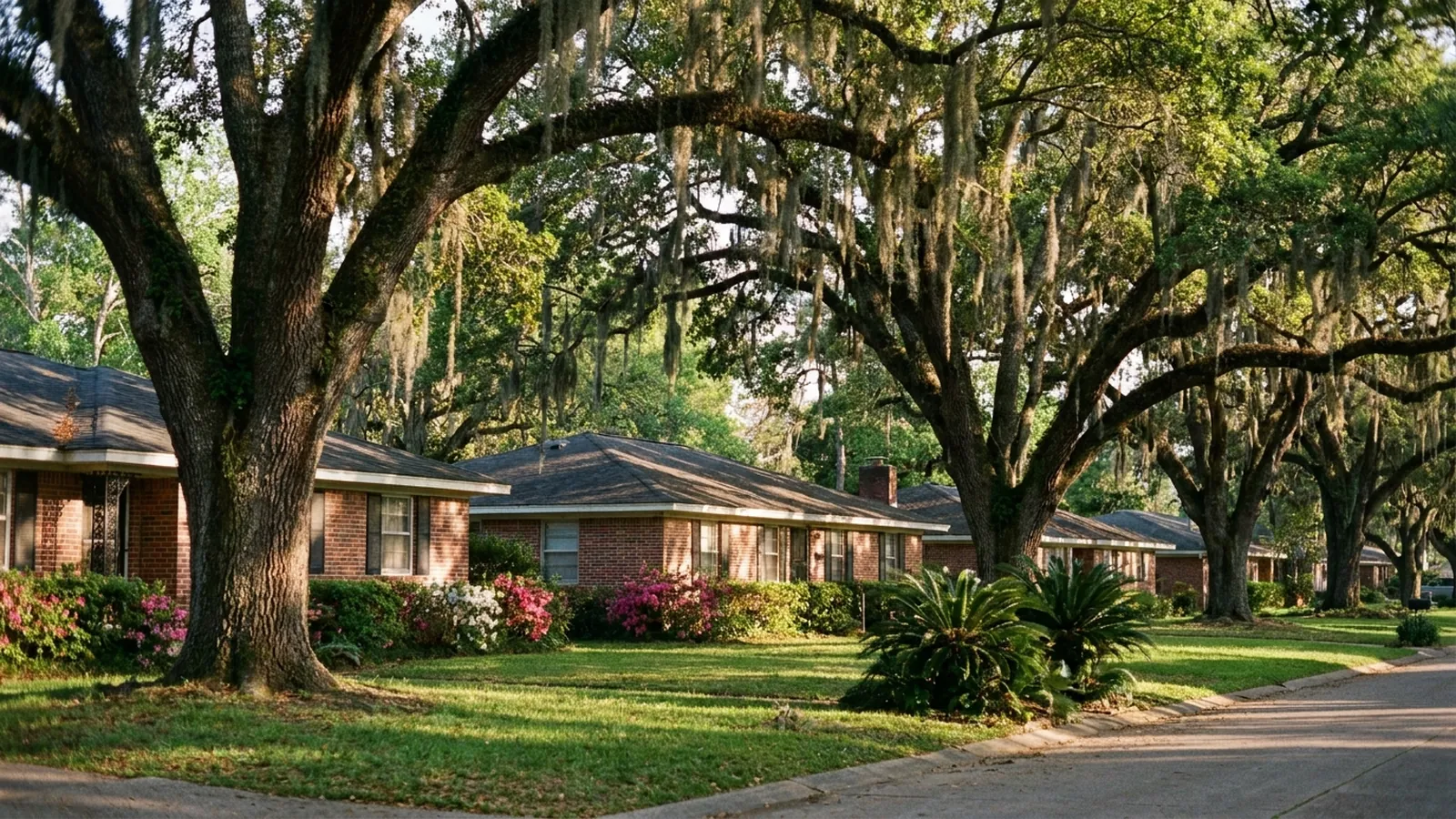
Concrete leveling in Baton Rouge runs $500–$2,500 for most driveways, patios, and walkways. It is not foundation repair — flatwork sits on lighter ground preparation than a house slab, so it sinks earlier, making it the cheapest early reading you get on the soil beside your foundation.
Why sunken flatwork is worth reading, how foam and mudjacking differ on soft clay, and when lifting is the wrong answer.
Flatwork reports first
A driveway is thinner than a foundation, carries almost no load, and was placed on ground that received a fraction of the preparation the house pad did. That makes it more sensitive, not less important. When soil beside the house softens or a void opens beneath it, the driveway registers it while the foundation is still bridging.
So a sunken walkway is not automatically a warning about the house. But sunken flatwork on the same side as a low floor reading, or on the side where water collects, is a pattern — and it is free to notice.
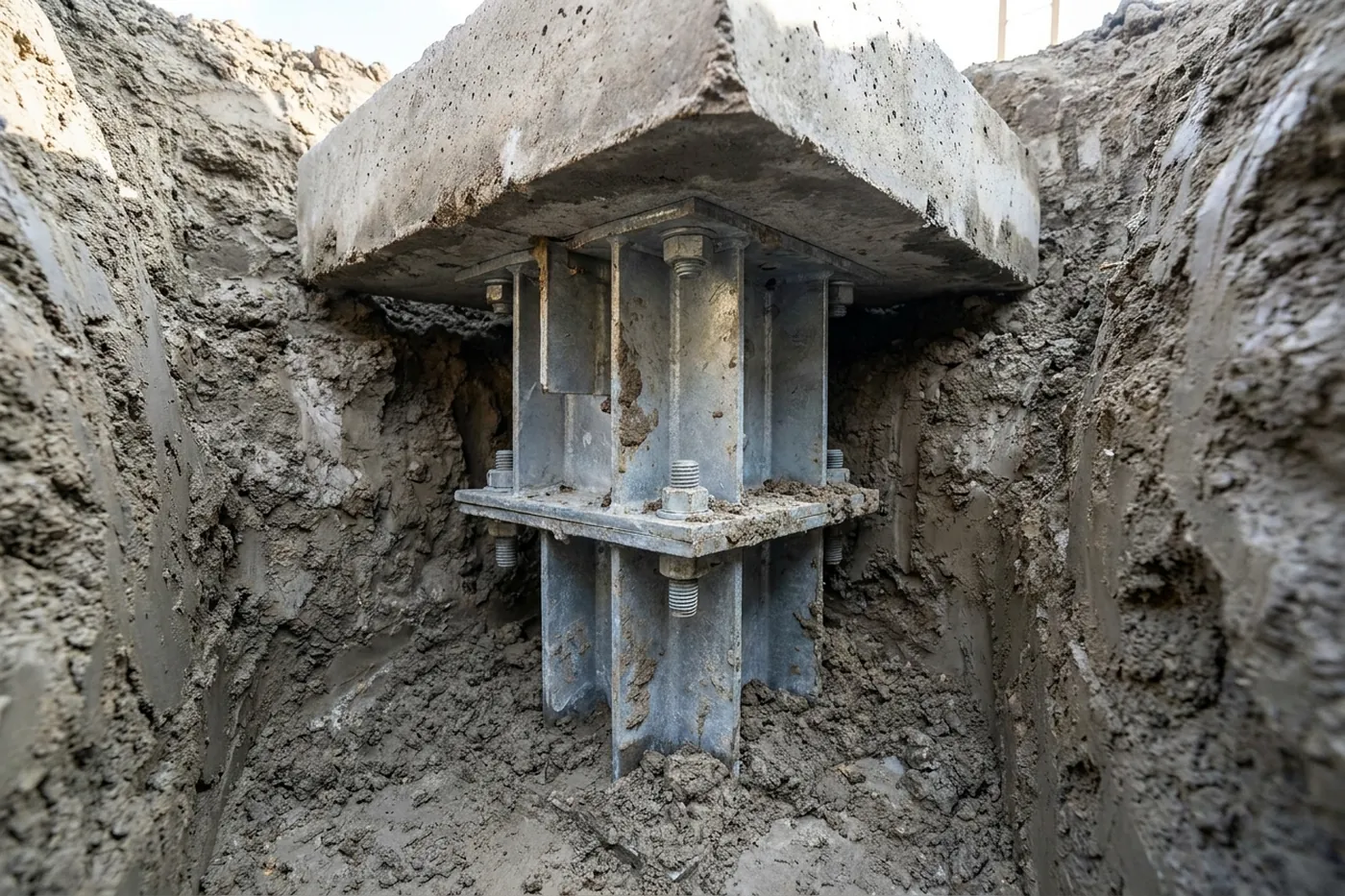
Foam or mudjacking, on soft ground
| Polyurethane foam | Mudjacking | |
|---|---|---|
| Typical cost | $1,200–$2,500 | $500–$1,500 |
| Added weight | Very light | Substantial — a cement slurry |
| Cure time | Minutes | Hours to a day |
| Access holes | Around 5/8 inch | Around 1–2 inches |
| Best where | Soil is soft and adding load is unwise | Ground is competent and budget leads |
On soft alluvial clay the weight column is the one that matters. Injecting a heavy slurry into ground that failed partly because it could not carry what was already there is a decision worth making deliberately rather than by price alone.
When lifting is the wrong answer
Leveling fills the void that exists now. It does not address whatever produced the void. Where a section of flatwork has been lifted before and sunk again in the same place, the second lift is treating a symptom that has already demonstrated it will return.
That is the point to look at what is feeding it — usually water arriving somewhere it should not, which is a drainage question, occasionally something under the slab itself. Lifting a third time is the most expensive way to avoid asking.
Concrete leveling — the short version
What does concrete leveling cost in Baton Rouge?
Concrete leveling runs $500-$2,500 for most driveways, patios, and walkways. Polyurethane foam injection sits at the upper end and cures in minutes; mudjacking is cheaper and heavier. Both lift the slab back to grade by filling the void that opened underneath it.
Is my sunken driveway a sign the house is next?
Not necessarily, but it is worth reading rather than ignoring. Flatwork is thinner, lighter, and sits on less prepared ground than a house slab, so it reports soft soil earlier. Sunken flatwork on the same side as interior symptoms is a pattern worth measuring.
Foam or mudjacking?
Foam is lighter, cures in minutes, needs smaller holes, and does not add much weight to ground that is already soft - which matters here. Mudjacking costs less and uses a cement slurry, but it adds mass. On soft alluvial clay the weight difference is a real consideration, not a sales point.
How long does leveled concrete stay level?
As long as the ground beneath it stays put. Leveling fills the void that exists today; if whatever created that void is still working, it will open again. Where flatwork has sunk twice in the same place, the useful next step is finding out why rather than lifting it a third time.
Can you level a slab the house sits on?
House slabs are a different job. Flatwork leveling fills voids under unloaded concrete; a foundation carrying walls and a roof needs support taken down to bearing, which is piering or slab repair. A company that offers to foam-lift your house should be asked exactly what it is lifting from.
Get a Baton Rouge foundation evaluation
Tell us what the house is doing and roughly when it started — a crack that opens in dry weather and closes after rain reads differently from one that only ever widens. If you know which way the floor falls, say so. That single detail often separates a moisture problem from a ground-movement problem before anyone visits. A local specialist who serves Baton Rouge will call you back.