
Homeowners insurance usually does not cover foundation repair in Louisiana. Standard policies exclude earth movement, settling, and soil conditions — which describes most foundation claims. The notable exception is sudden accidental water discharge, such as a burst line under the slab.
What the exclusions actually say, which claims get paid, and why filing is not automatically free.
The exclusion that decides most claims
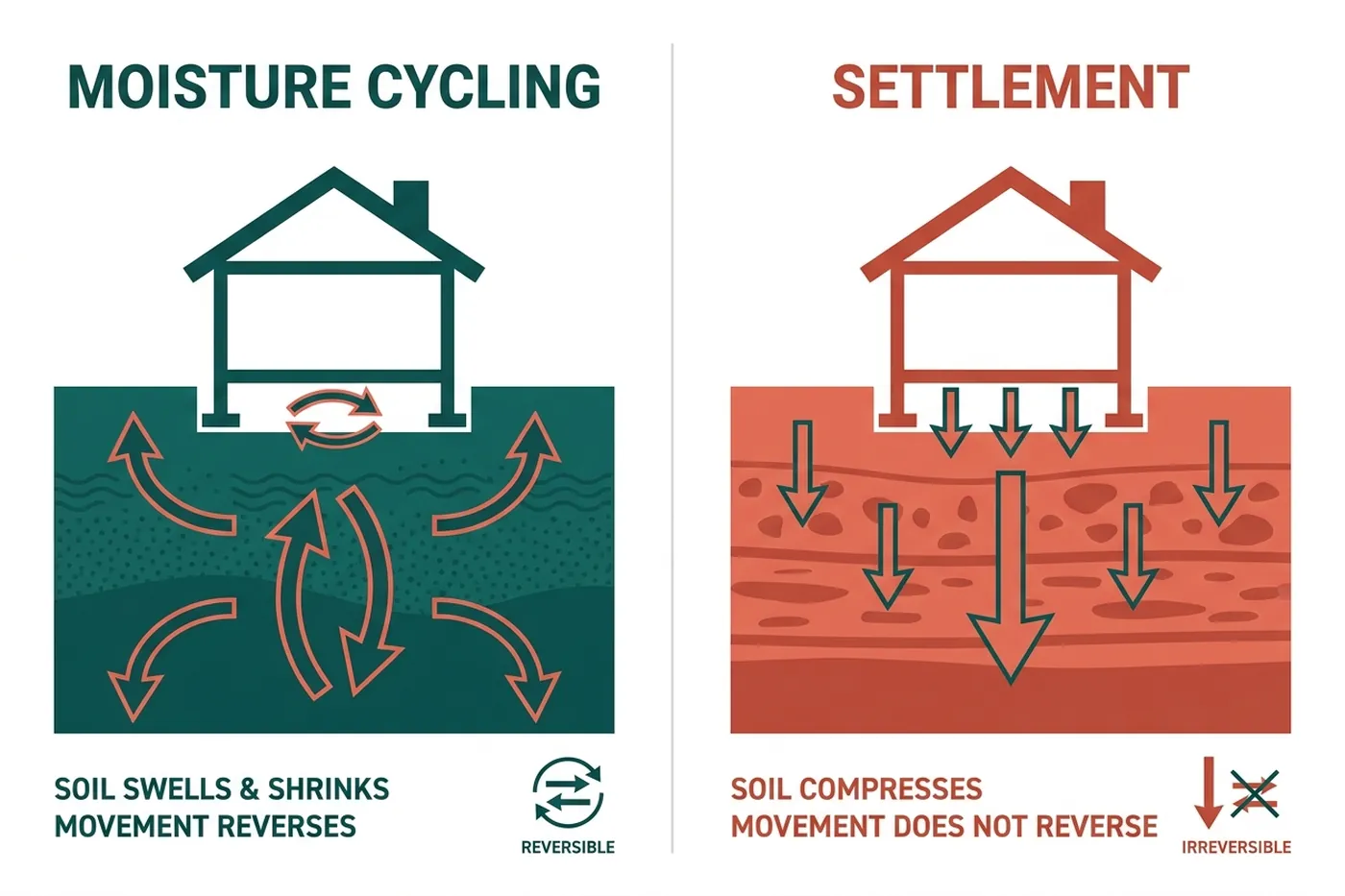
Nearly every standard homeowners policy contains an earth movement exclusion. It is broad by design, and it typically names settling, cracking, shrinking, bulging, and expansion of foundations directly. Soil conditions are excluded separately in most forms.
Between those two clauses, the ordinary Baton Rouge foundation problem — a house settling into soft alluvial clay — is excluded twice over. That is not an insurer being difficult; it is the policy operating exactly as written. Foundation movement from soil behaviour is treated as a maintenance and ground-condition matter rather than an insured peril.
What does get paid
| Cause | Typical outcome | What decides it |
|---|---|---|
| Burst supply line under the slab | Often covered | Sudden and accidental, documented promptly |
| Long-term seeping leak | Usually denied | Treated as gradual damage, not sudden |
| Settlement in soft clay | Denied | Earth movement and soil condition exclusions |
| Flood-related damage | Not under homeowners | Requires separate flood coverage |
| Settlement emerging after a flood | Frequently disputed | Whether it is direct flood damage or a soil condition |
| Impact — vehicle, fallen tree | Often covered | Named peril, clear cause |
The plumbing case is the one worth taking seriously. If movement is tight, localised, and unexplained by where water drains, a plumbing test is both the cheaper diagnostic and the route to the only claim likely to be paid — see how that pattern reads on the slab repair page.
Flood is a separate policy, and a separate argument
Flood damage is excluded from standard homeowners insurance and needs its own coverage. Even with it, there is a timing problem specific to foundations: flood policies respond to damage caused by the flood, and foundation settlement often emerges months later as saturated ground consolidates.
Insurers frequently characterise that delayed movement as a soil condition rather than direct flood damage. Documenting the house's condition promptly after a flood event — elevation readings, dated photographs — is the only thing that meaningfully strengthens that conversation, and it has to be done before the argument starts.
Filing is not automatically free
Two things worth knowing before you call. A denied claim can still appear in your loss history, and in some cases an inquiry is logged even without a formal claim — worth asking your agent directly how they treat it.
The reasonable approach: read the earth movement exclusion in your own policy, establish whether the cause is plausibly sudden, and file when it is. When the cause is ground behaviour, a denial is the likely outcome and the claim history is a real cost. What you spend on understanding the actual repair pricing is usually better invested than what you spend arguing an excluded peril.
Insurance — the short version
Does homeowners insurance cover foundation repair in Louisiana?
Usually not. Standard policies exclude earth movement, settling, and soil conditions, which covers most foundation claims. The common exceptions are sudden accidental events - a burst supply line under the slab is the one most often paid. Read your policy's earth movement exclusion before assuming either way.
What about flood damage to a foundation?
Flood is excluded from standard homeowners policies entirely and requires separate flood insurance. Even then, flood policies address damage caused by the flood event, and settlement that emerges months afterward is frequently disputed as a soil condition rather than direct flood damage.
Will a plumbing leak claim be paid?
It has the best odds of any foundation-related claim. Many policies cover sudden accidental water discharge, including the resulting damage. The distinction insurers draw is between a pipe that burst and a pipe that had been seeping for years - documentation and timing decide it, so report promptly.
Should I file a claim anyway?
Read the earth movement exclusion first, and consider talking to your agent about whether an inquiry is logged as a claim. A denied claim can appear in loss history. If the cause is plausibly a sudden event, file. If it is soil movement, a denial is likely and may not be cost-free.
Does a home warranty cover it?
Home warranty products generally exclude foundations outright, and the ones that mention structural coverage typically cap it well below the cost of the work. Check the specific exclusions rather than the marketing summary, because foundation is one of the most commonly excluded items in the category.
Get a Baton Rouge foundation evaluation
Tell us what the house is doing and roughly when it started — a crack that opens in dry weather and closes after rain reads differently from one that only ever widens. If you know which way the floor falls, say so. That single detail often separates a moisture problem from a ground-movement problem before anyone visits. A local specialist who serves Baton Rouge will call you back.