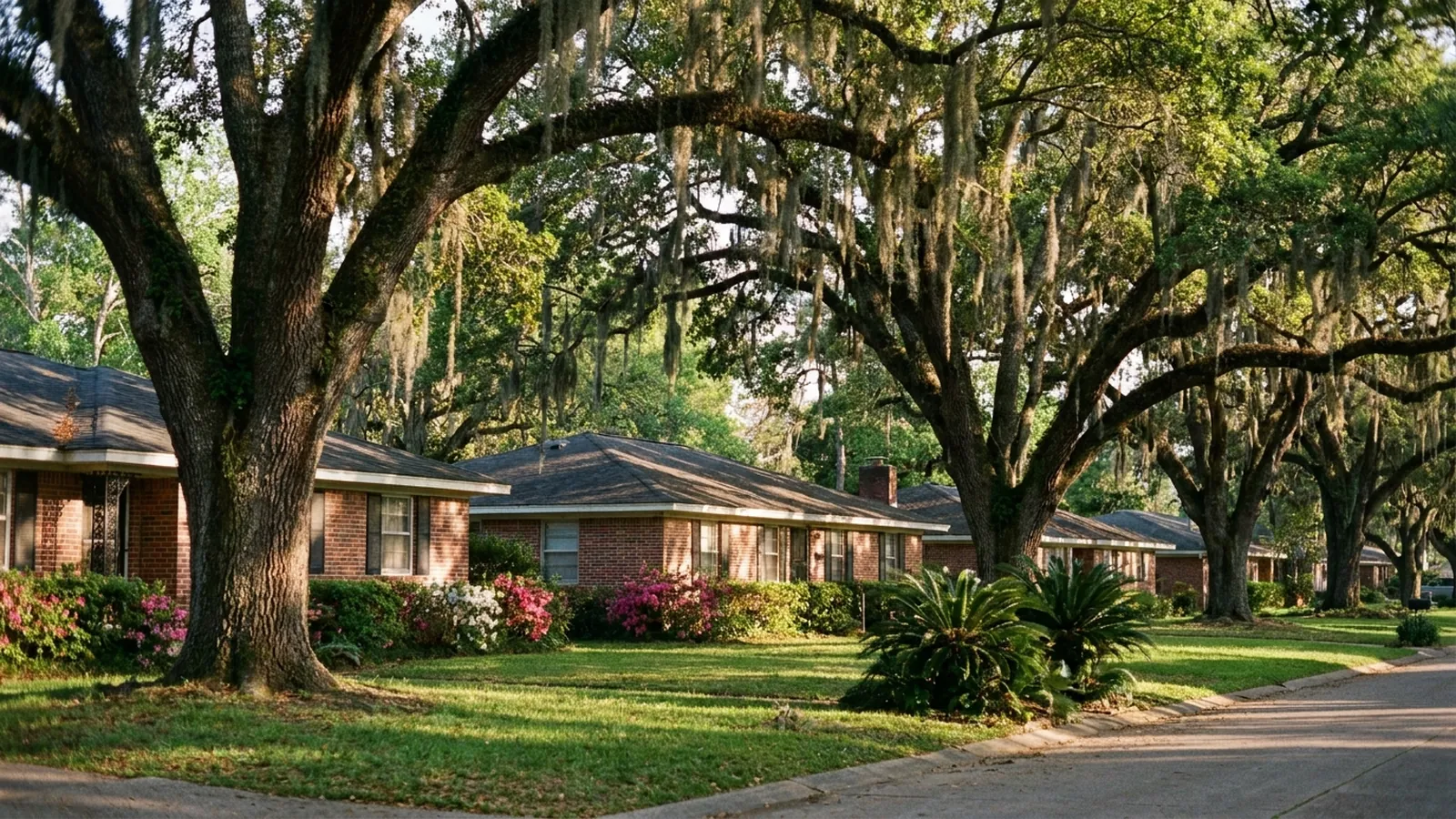
Foundation settlement repair in Baton Rouge runs $4,000–$15,000, priced mainly by depth to competent bearing. Settlement is progressive and directional: the house goes down and stays down. Movement that reverses with the seasons is moisture cycling instead, and that needs drainage, not piers.
How settlement is distinguished from the alternatives, what causes it in this parish, and when an independent engineer is worth the fee.
What settlement looks like, measured
Settlement has a signature that other causes do not share. Elevation readings taken across the whole footprint show a consistent slope toward the affected area. Crack widths grow in one direction and do not recover. Doors bind on the same edge and keep binding. The pattern is coherent and it persists.
Contrast that with moisture cycling, which is the more common finding here. That movement reverses — cracks widen through a dry stretch and close after a wet one, doors stick in one season and swing free in another. Both produce cracked drywall and a sticking door. Only one of them is corrected by underpinning.
Why it happens in this parish
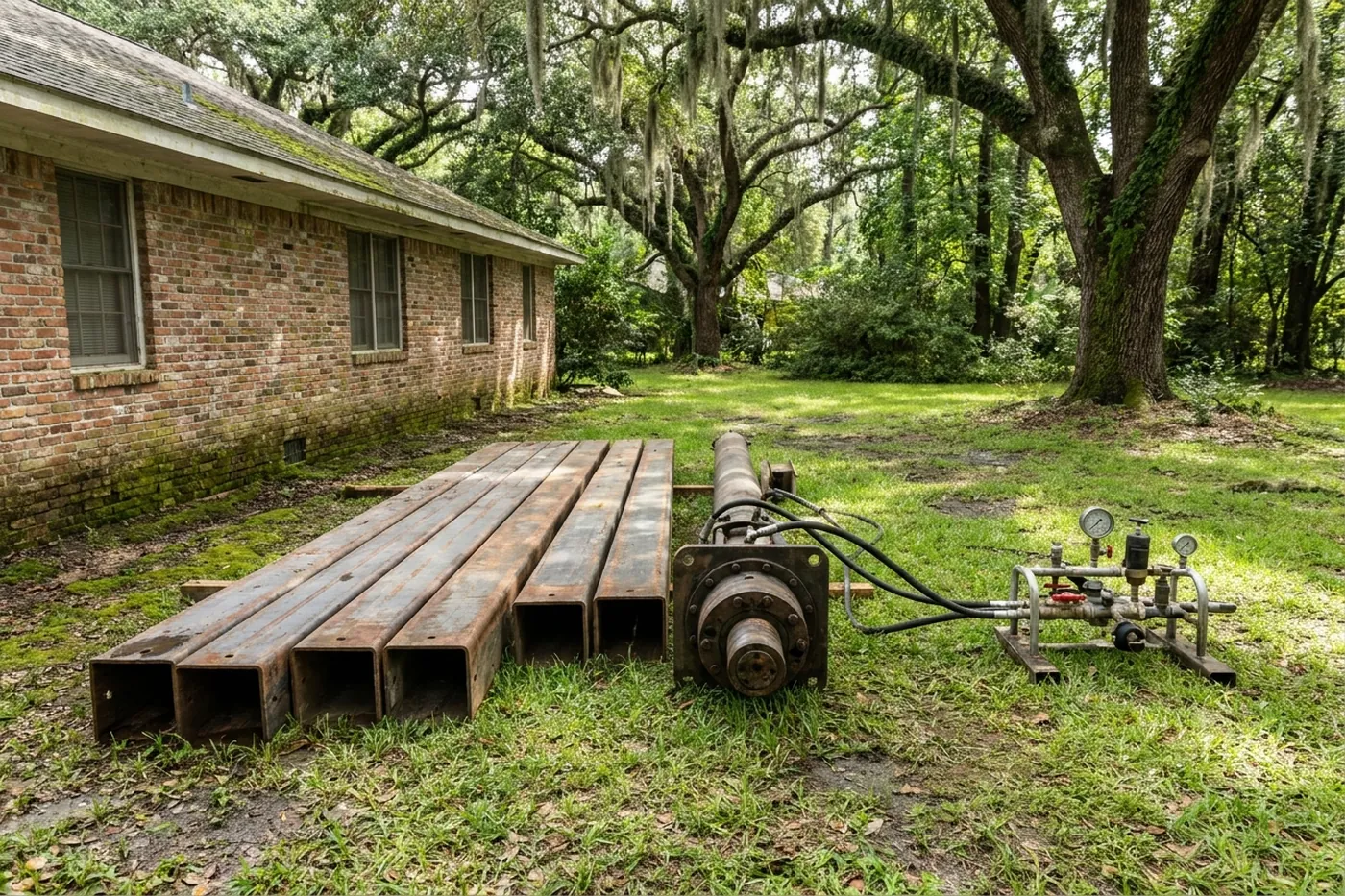
The ground here is soft alluvial and deltaic clay with a high water table. Clay of that kind consolidates under sustained load — it compresses slowly as pore water is squeezed out — and loses bearing capacity when saturated. A house is a sustained load. Regional flooding, including the August 2016 event, saturated soils across the parish and was followed by a wave of settlement claims for exactly this reason.
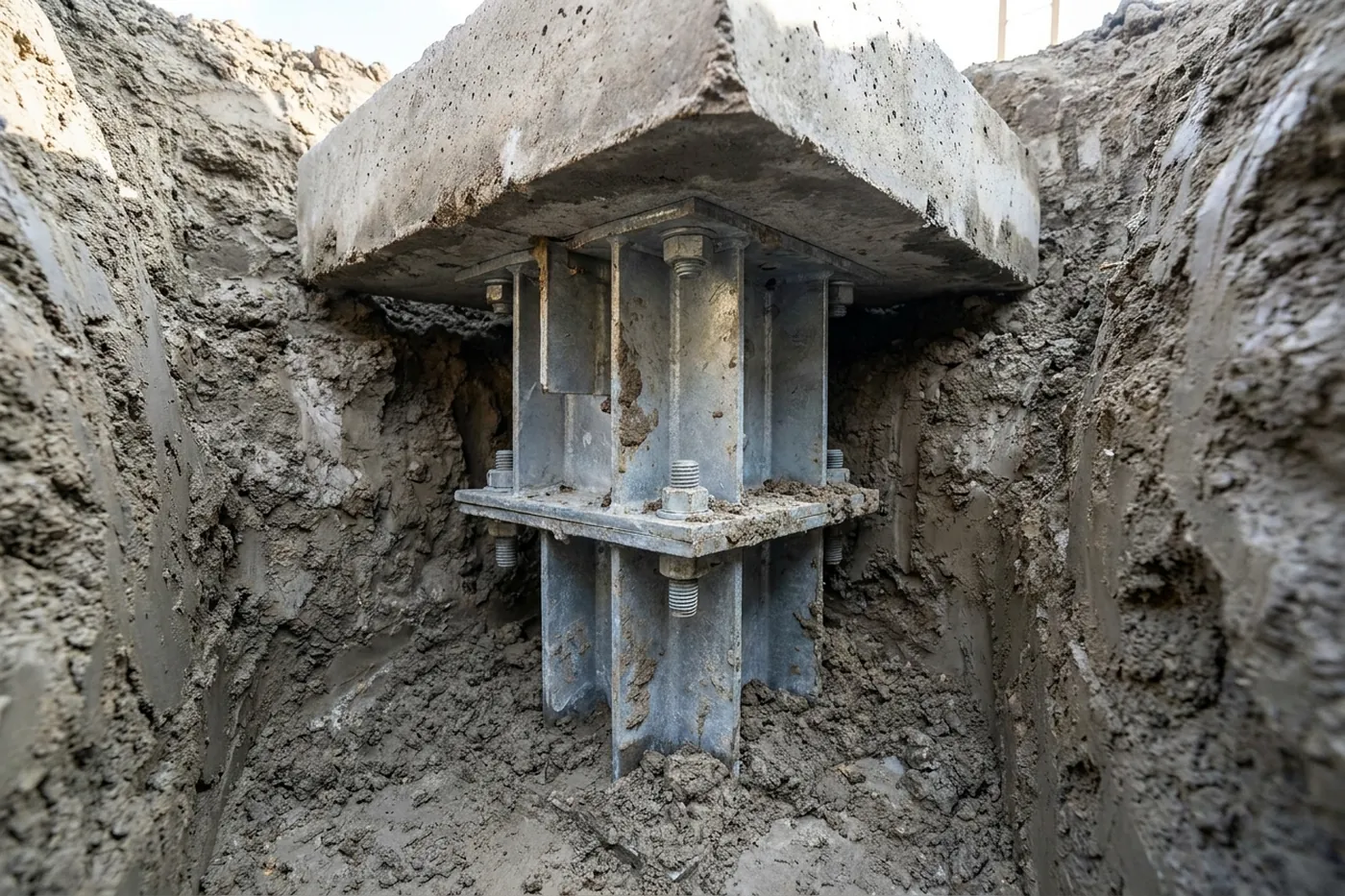
This is ordinary, well-understood soil mechanics, and underpinning is the engineered response to it. Where the readings show this pattern, piering is the right purchase and it works.
The other thing that moves ground here
Baton Rouge is unusual. The Baton Rouge Fault system runs through East Baton Rouge Parish, and among onshore Gulf Coast growth faults it is one of the few that is active and reaches the ground surface rather than dying out at depth. The Louisiana Geological Survey has mapped its trace.
We raise this for one reason and stop there: whether it bears on a specific property is a site-specific geotechnical question. It is not visible from a driveway, it is not diagnosable from a crack, and no foundation contractor can determine it by looking at your walls. Any company that tells you your cracks are caused by the fault, without a geotechnical assessment, is selling rather than diagnosing. What a good specialist can do is measure your house honestly and tell you what the readings support.
Distinguishing the causes
| Observation | Points toward | First move |
|---|---|---|
| Cracks widen dry, close wet, year after year | Moisture cycling in clay | Drainage correction |
| Consistent slope across the footprint, progressive | Settlement | Piering |
| One room low, everything else flat, no water pattern | Possible under-slab leak | Plumbing test first |
| Movement began after flooding | Saturation-driven consolidation | Readings now, repeat in months |
| Readings flat, cracks static all year | Movement finished | Cosmetic repair |
When to bring in an independent engineer
For most residential settlement a contractor taking proper elevations is enough. An independent structural engineer earns the fee in three situations: when two bids disagree sharply on scope, when damage is severe enough that you want a second opinion on safety, and when you simply want an assessment from someone whose income does not depend on the recommendation. In this parish the third reason is the most underrated.
Settlement — the short version
What does foundation settlement repair cost in Baton Rouge?
Settlement repair runs $4,000-$15,000 for most homes, driven mainly by how deep support has to reach before it finds material that carries load. Localised settlement under one corner can be addressed for less. The depth assumption in the bid is what makes two quotes comparable.
How do I know it is settlement and not something else?
Settlement is progressive and directional - the house goes down and stays down, and elevation readings across the footprint show a consistent slope toward the affected area. Movement that reverses with the seasons is moisture cycling instead, and that responds to drainage rather than to piers.
What causes settlement in this parish specifically?
Soft alluvial and deltaic clays with a high water table, which consolidate under sustained load and lose bearing capacity when saturated. Regional flooding accelerates it. This is ordinary, well-understood ground behaviour and it is what underpinning is designed to address.
Is the Baton Rouge Fault a factor?
The Baton Rouge Fault system runs through East Baton Rouge Parish and is unusual among Gulf Coast growth faults in being active and reaching the ground surface. Whether it affects a specific property is a site-specific geotechnical question, not something visible from a driveway - and not something any foundation contractor can determine from a crack.
Will settlement stop on its own?
Consolidation slows as soil compresses, so some settlement does taper. Whether it has stopped for your house is answerable with measurement rather than opinion: elevation readings and dated crack widths taken across a full wet and dry season. Stable readings mean you can repair cosmetically instead of structurally.
Does a structural engineer need to be involved?
For most residential settlement, a contractor taking proper elevation readings is sufficient. An independent engineer earns their fee when bids disagree sharply on scope, when the damage is severe, or when you want an assessment from someone with no financial stake in the recommendation.
Get a Baton Rouge foundation evaluation
Tell us what the house is doing and roughly when it started — a crack that opens in dry weather and closes after rain reads differently from one that only ever widens. If you know which way the floor falls, say so. That single detail often separates a moisture problem from a ground-movement problem before anyone visits. A local specialist who serves Baton Rouge will call you back.