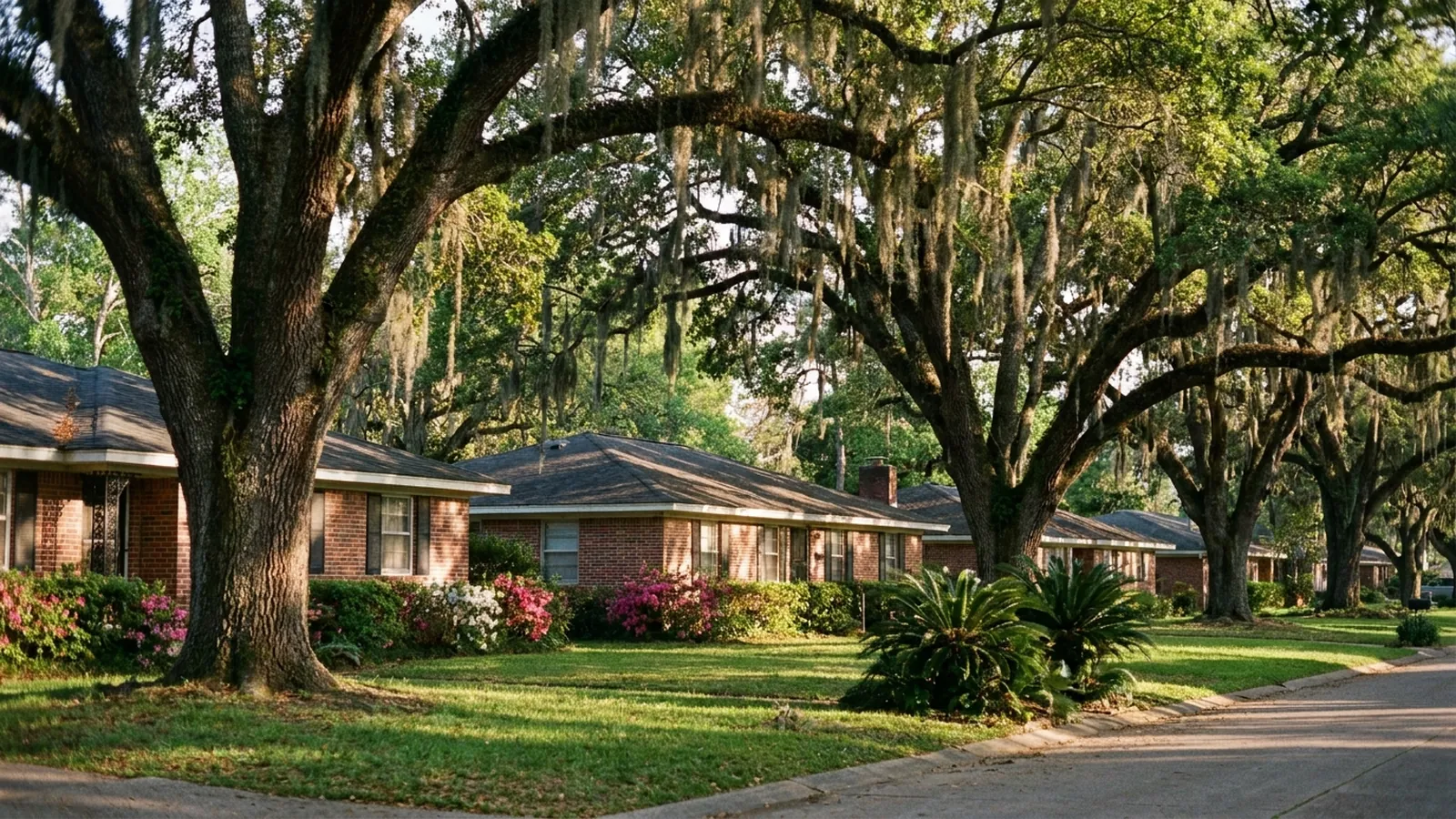
House leveling in Baton Rouge runs $4,000–$15,000 for most homes. The term comes from pier-and-beam construction, where a house really could be jacked and shimmed level from underneath — on a slab home it means underpinning and controlled lift, the same work as piering.
Where the phrase comes from, what it means on the two construction types found here, and why the lift target belongs in writing.
Why the term stuck here
Older housing across south Louisiana sits on piers and beams, raised off ground that floods. On that construction, leveling is literal: you get underneath, you jack the framing, you shim the supports, and the house comes back to level. The name describes the work exactly.
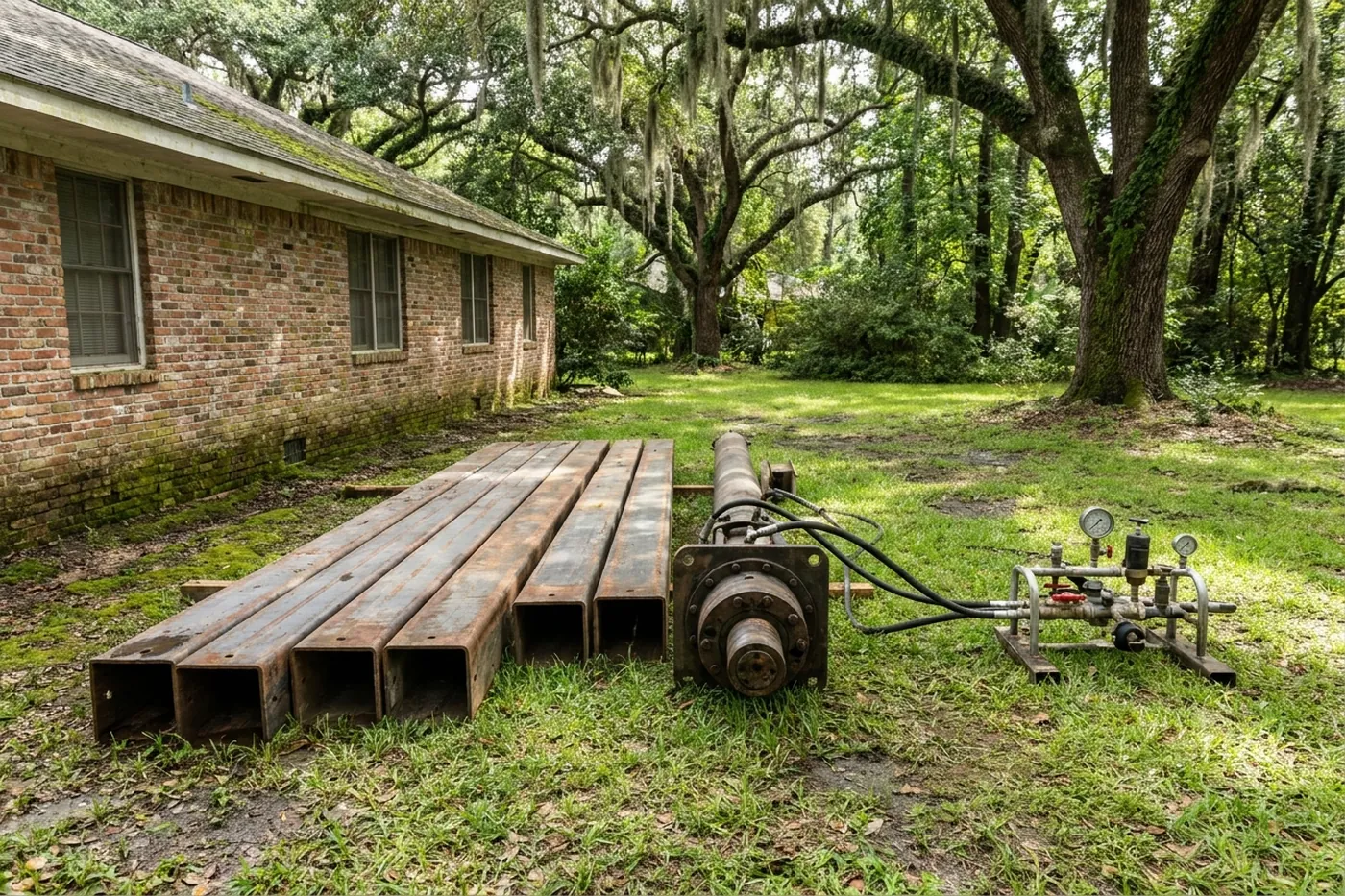
Most newer construction in the parish is slab-on-grade, because a high water table makes anything else impractical. The name came along anyway. So when a Baton Rouge homeowner asks for house leveling on a slab house, what they are describing is underpinning — support taken down to competent bearing, then a controlled recovery of elevation.
The two construction types, and what each needs
| Pier and beam | Slab on grade | |
|---|---|---|
| Where the work happens | From the crawl space, below the framing | Around and beneath the slab perimeter |
| What is adjusted | Shims and supports under beams | Piers carrying the slab edge |
| Reversibility | Genuinely adjustable later | Permanent once set |
| Typical range | $3,000–$10,000 | $4,000–$15,000 |
| Extra thing to check | Rot and settlement in the supports themselves | Depth to bearing, and the pier log |
Lift target is a decision, not a default
Recovering elevation is not automatically the right choice. Bringing a settled slab back up closes some cracks and opens others, and finishes that went in while the house was out of level — tile, stone, cabinetry scribed to a sloping floor — can crack as it comes back.
There are two defensible answers and a bid should name one. Stabilise in place holds the house where it is and stops further movement; it is cheaper and lower risk. Recover a defined amount restores some elevation and accepts the finish risk. What should not happen is finding out which one you bought after the fact.
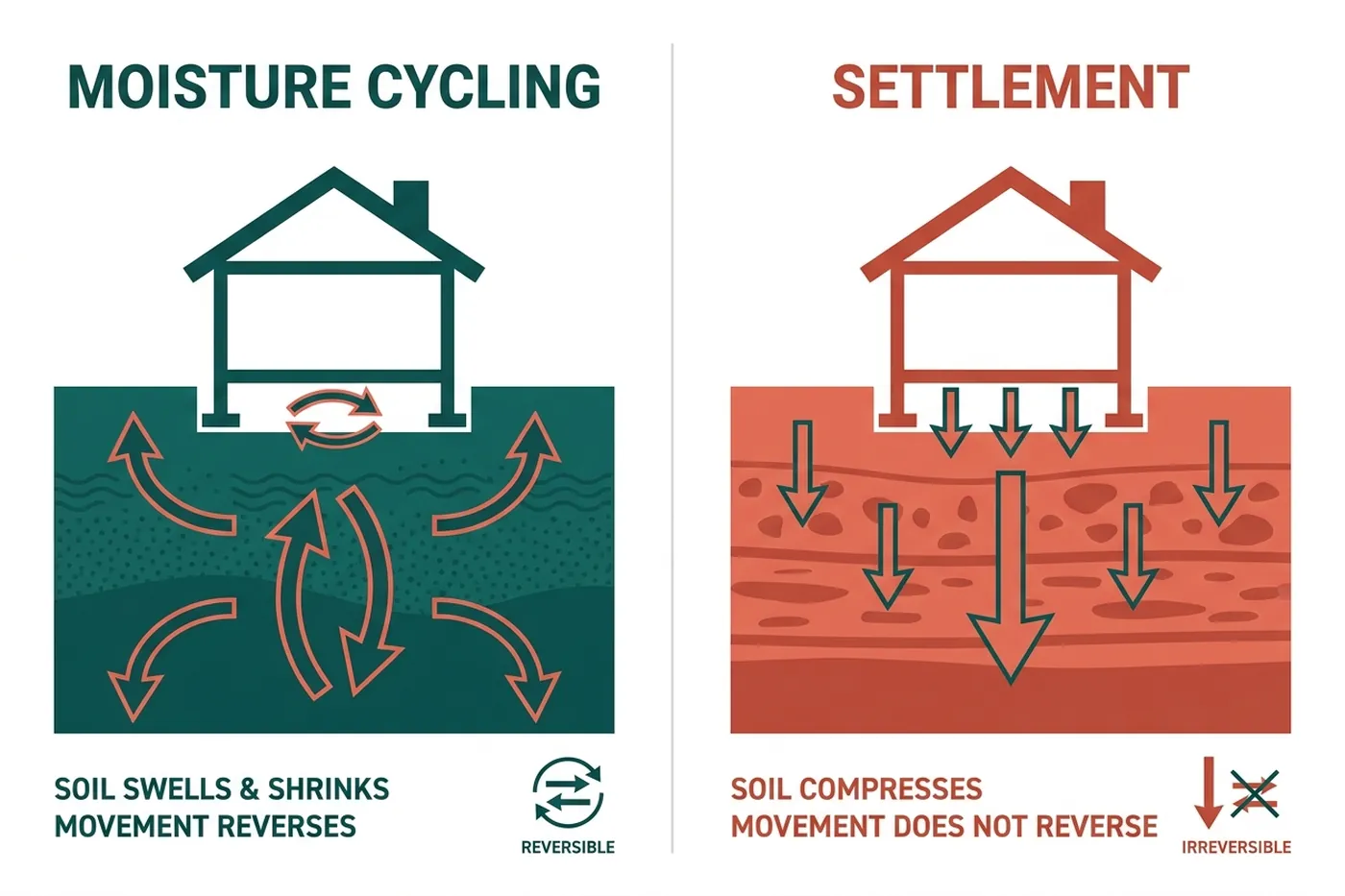
Before you level, confirm what is moving
Leveling addresses a house sitting low. It is the right work when the readings show settlement, and the wrong purchase when the symptoms come from something else. In this parish that check is worth doing properly, because two different mechanisms produce similar-looking damage — see how settlement is distinguished before committing to a scope.
House leveling — the short version
What does house leveling cost in Baton Rouge?
House leveling runs $4,000-$15,000 for most homes, which is the same range as piering because on a slab house it is largely the same work. Pier-and-beam homes with accessible framing can sit lower, since shimming and jacking from below is less involved than underpinning a slab.
Is house leveling the same as foundation repair?
It is the local name for most of it. The phrase comes from pier-and-beam construction, where a house genuinely could be jacked and shimmed back to level from underneath. Applied to a slab home it means underpinning and lift, which is a different operation with the same goal.
Can a slab house actually be leveled?
Elevation can be recovered, within limits, and it should be a stated decision rather than an assumption. Lifting a slab closes some cracks and opens others, and tile or stone finishes can crack during recovery. Ask for the lift target in writing - stabilise in place, or recover a defined amount.
What about pier-and-beam homes?
Older homes on piers and beams are more forgiving, because the framing sits above the ground rather than in it. Shimming and re-supporting from the crawl space is genuinely reversible work. The trade-off is that the supports themselves need inspecting for rot and settlement in a way a slab does not.
How long does house leveling take?
Most residential jobs run two to five working days on site once the layout is set. The house stays occupied for the majority of that. Recovery of elevation is done gradually rather than in one movement, because taking it too fast is how finishes crack.
Get a Baton Rouge foundation evaluation
Tell us what the house is doing and roughly when it started — a crack that opens in dry weather and closes after rain reads differently from one that only ever widens. If you know which way the floor falls, say so. That single detail often separates a moisture problem from a ground-movement problem before anyone visits. A local specialist who serves Baton Rouge will call you back.